
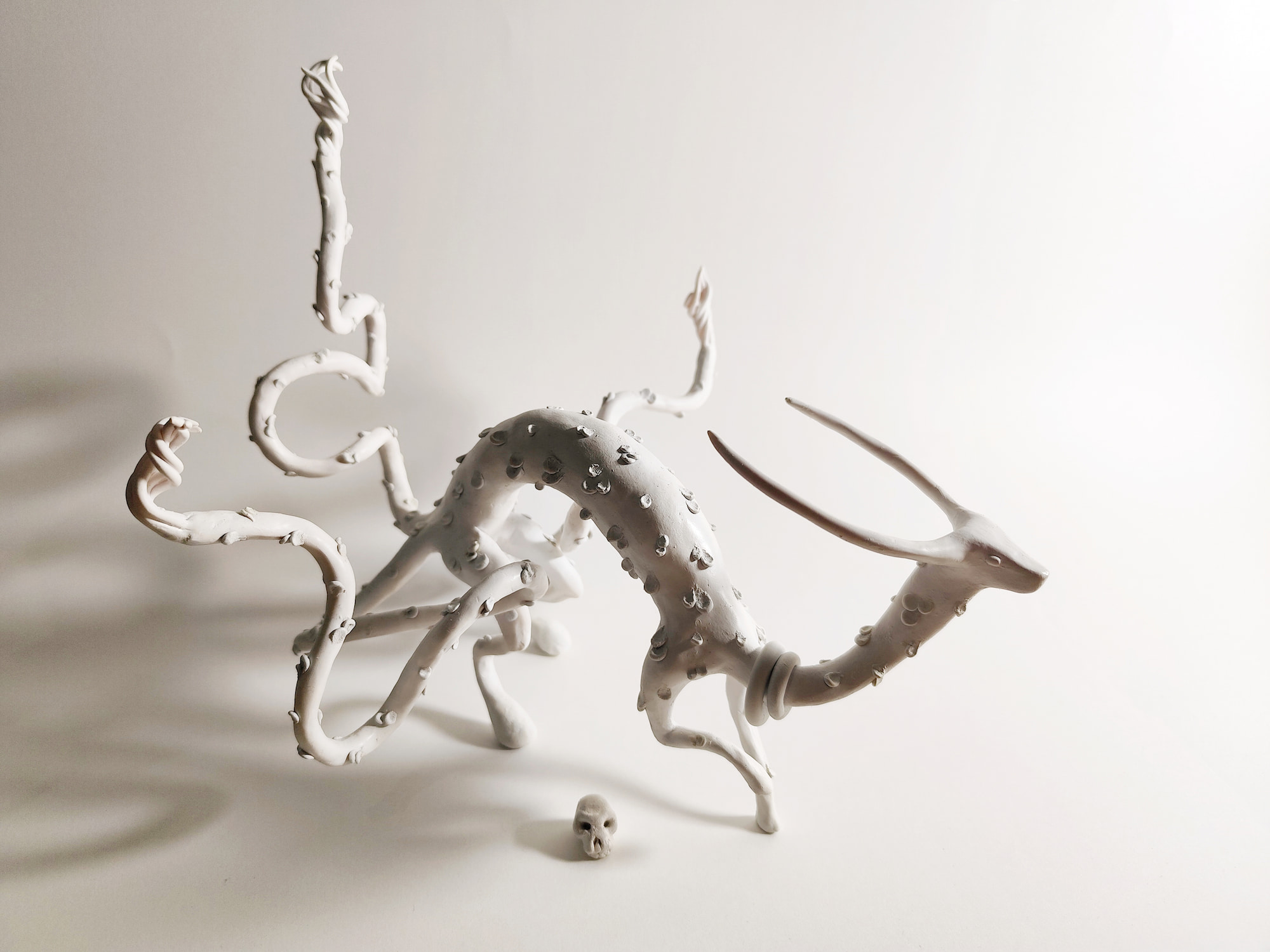
The Guardian: Death
Blanca de la Torre
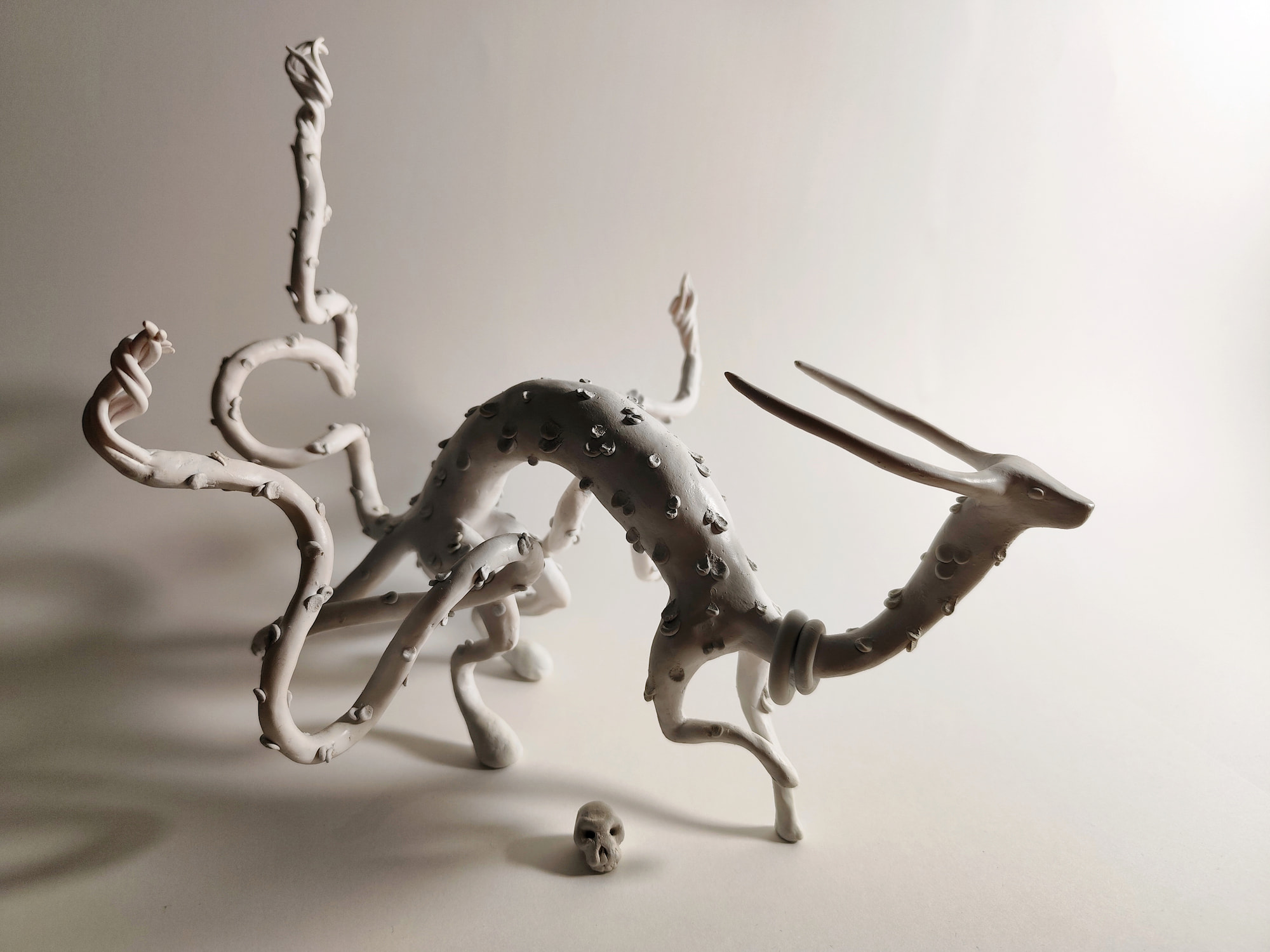
Polymer medium, acrylic paint, and aluminum armature.
Two-piece installation. Piece 1: 23 x 28.5 x 24.5 cm; Piece 2: 1.5 x 2 x 1.5 cm.
2026
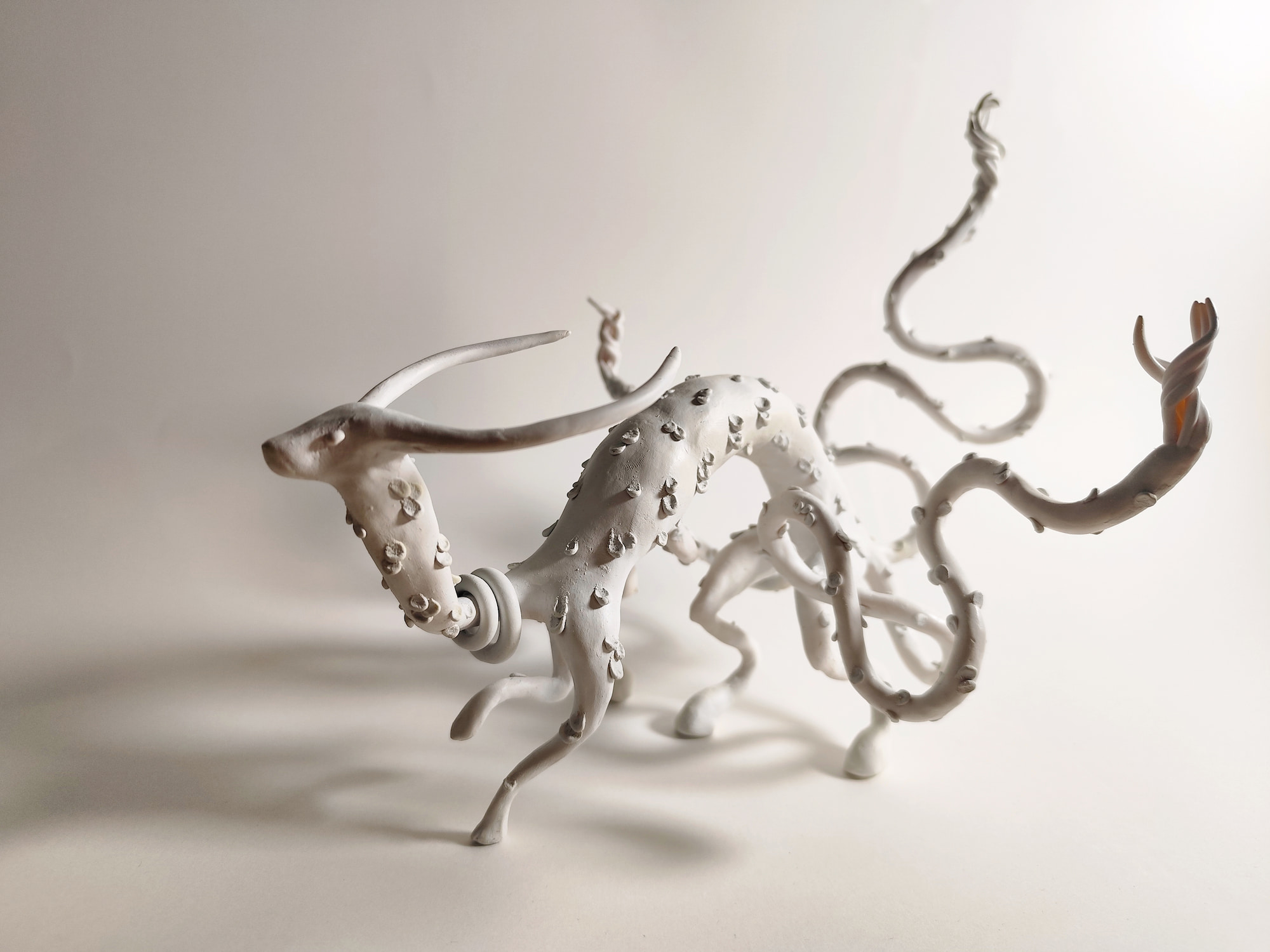
"The dragon no longer inhabits ancient myth, but the digital realm.
It no longer embodies the heavy, chthonic flesh of the past, but the lightness of an ethereal albedo.
It guards no material treasure, but the silence of finitude."
The Guardian: Death
Conceptual Rationale and Proposition
I. The Architecture of the Threshold and Sustained Finitude
This piece is part of an ongoing investigation into the ways in which mythical memory and archetypes of the psyche operate within the parameters of contemporary culture. Through the figure of a guardian safeguarding finitude, the work proposes a territory of pause against the acceleration and imperative of optimization dominating the present.
II. The Pathology of Acceleration and the Erasure of Endings
The contemporary condition is defined by an unprecedented imperative: the systematic acceleration of time and the absolute eradication of limits. Within the parameters of late-capitalism technoculture, everything must remain in a permanent state of frictionless expansion, optimization, and renewal. Digital connectivity, algorithmic capture, and consumerism conspire to build an environment where obsolescence is instantaneous, yet the ultimate horizon of obsolescence, that is, individual mortality, is aggressively sanitized, hidden, and treated as a design flaw or personal failure. In this climate of perpetual youth and seamless digital projection, the mere fact of physical wear, caducity, and the end is completely exiled from everyday visibility.
It is against this cultural pathology that this sculpture emerges. The work stems from an inescapable and foundational premise: our increasingly elusive, anxious, and broken relationship with the end of things. Facing the environmental demand for frictionless distraction, the piece acts as an ontological counterweight introducing a temporal rupture into the relentless flow of daily productivity. By confronting the viewer with the raw reality of closure, the sculpture prompts a recalibration of perception, demanding a pause within an economic and social architecture designed precisely to prevent us from stopping.
III. The Metamorphic Persistence of the Archetype
To articulate this confrontation with limits, the sculpture resorts to the dragon, understanding it as a long-duration archetypal structure within the collective imaginary. Distant from mere recreational consumption or ephemeral entertainment, this entity articulates a symbolic device of transit whose validity traverses profound cultural transformations: from Mesopotamian cosmogonies and Asian or medieval iconographic traditions to its reactivation in current interactive media, comic books, cinema, and contemporary virtual environments. The piece assumes that contemporary media configure the dynamic matrix where these vectors and psychopomps create and inscribe new pathways onto the visual surface of the present.
In this articulation, the draconian figure acts as the border marker par excellence, emerging at the boundary where the mapped territory ends and the uncertainty of the unmapped begins. By summoning this motif, the work notes that unconscious matrices regarding the limit do not dissolve with technical modernization; on the contrary, they undergo processes of reconfiguration and inscription onto the visual surface of the present. The piece thus operates as a vector of symbolic continuity, confirming how structural intuitions regarding finitude and the threshold persist under the technological mediation of our era.
IV. Materiality, Vectorial Precision, and Channeled Energy
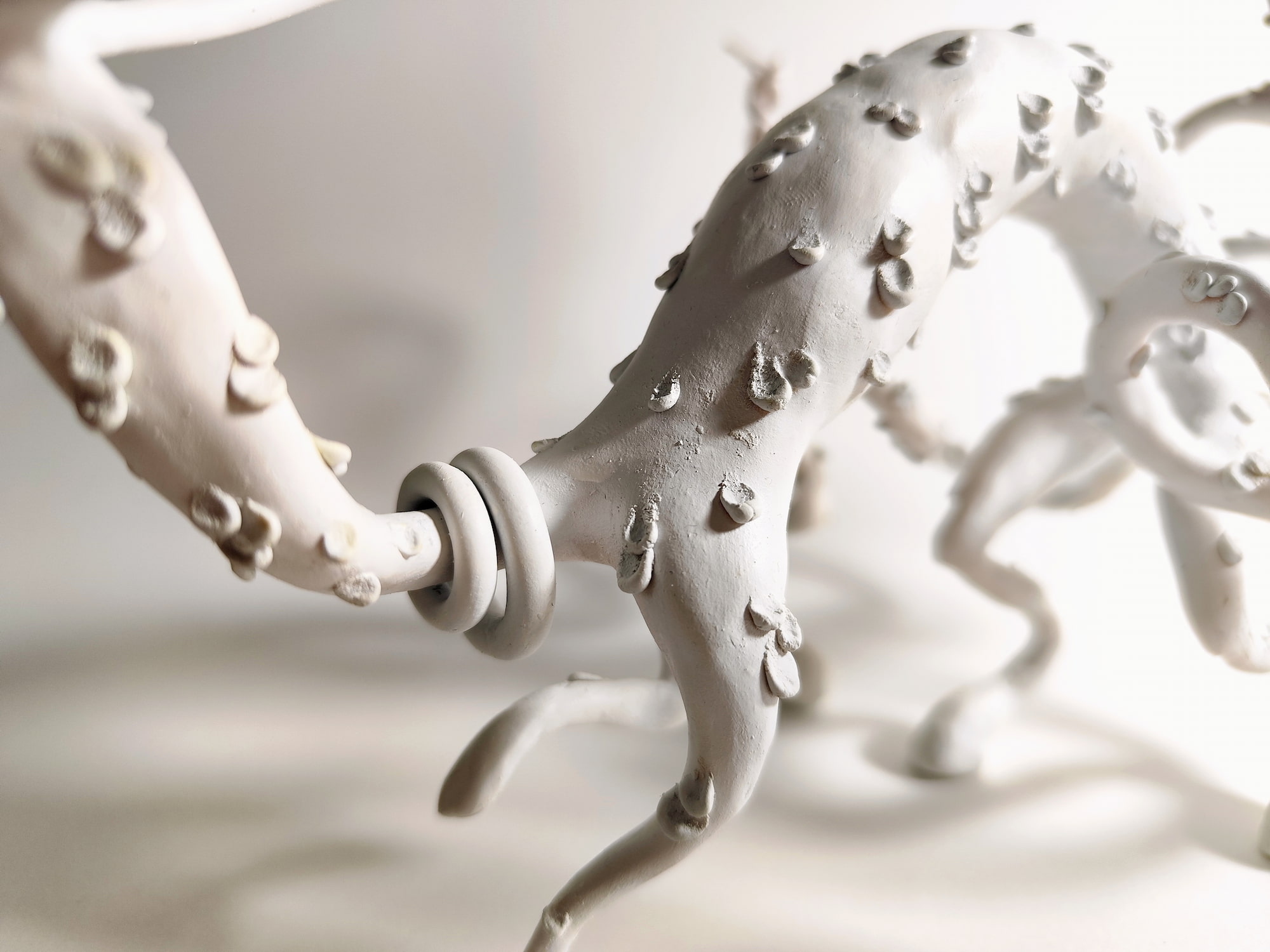
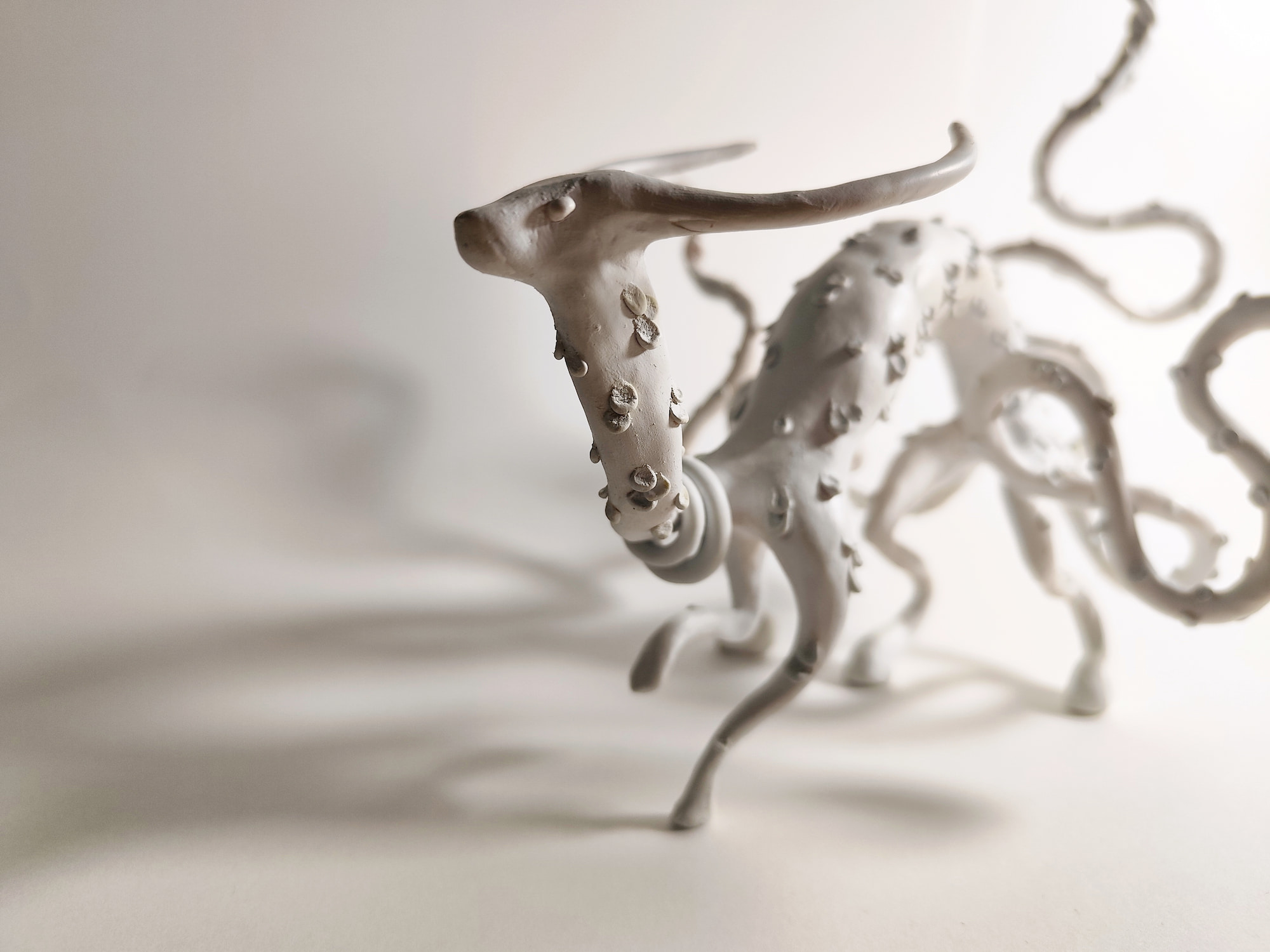
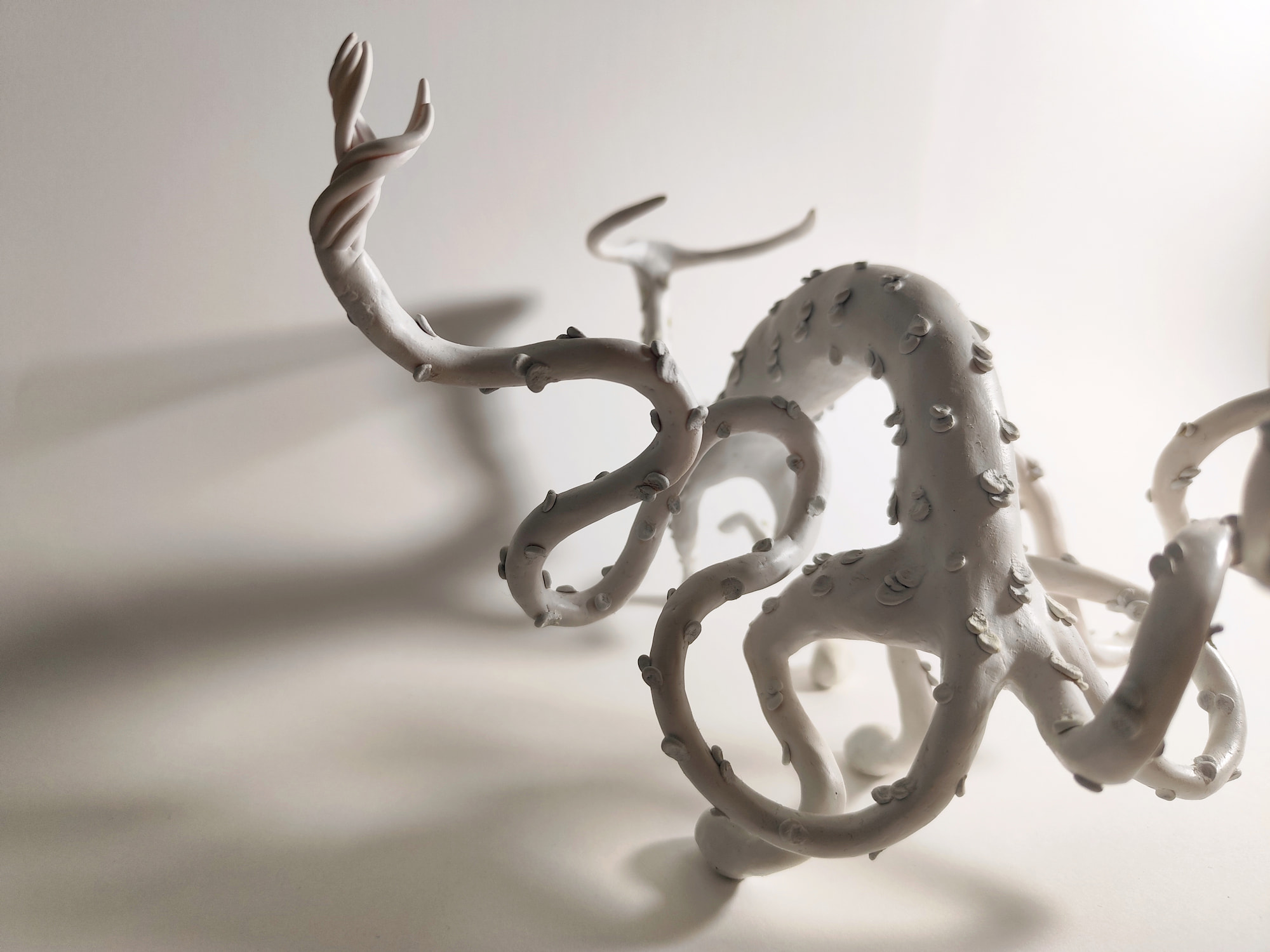
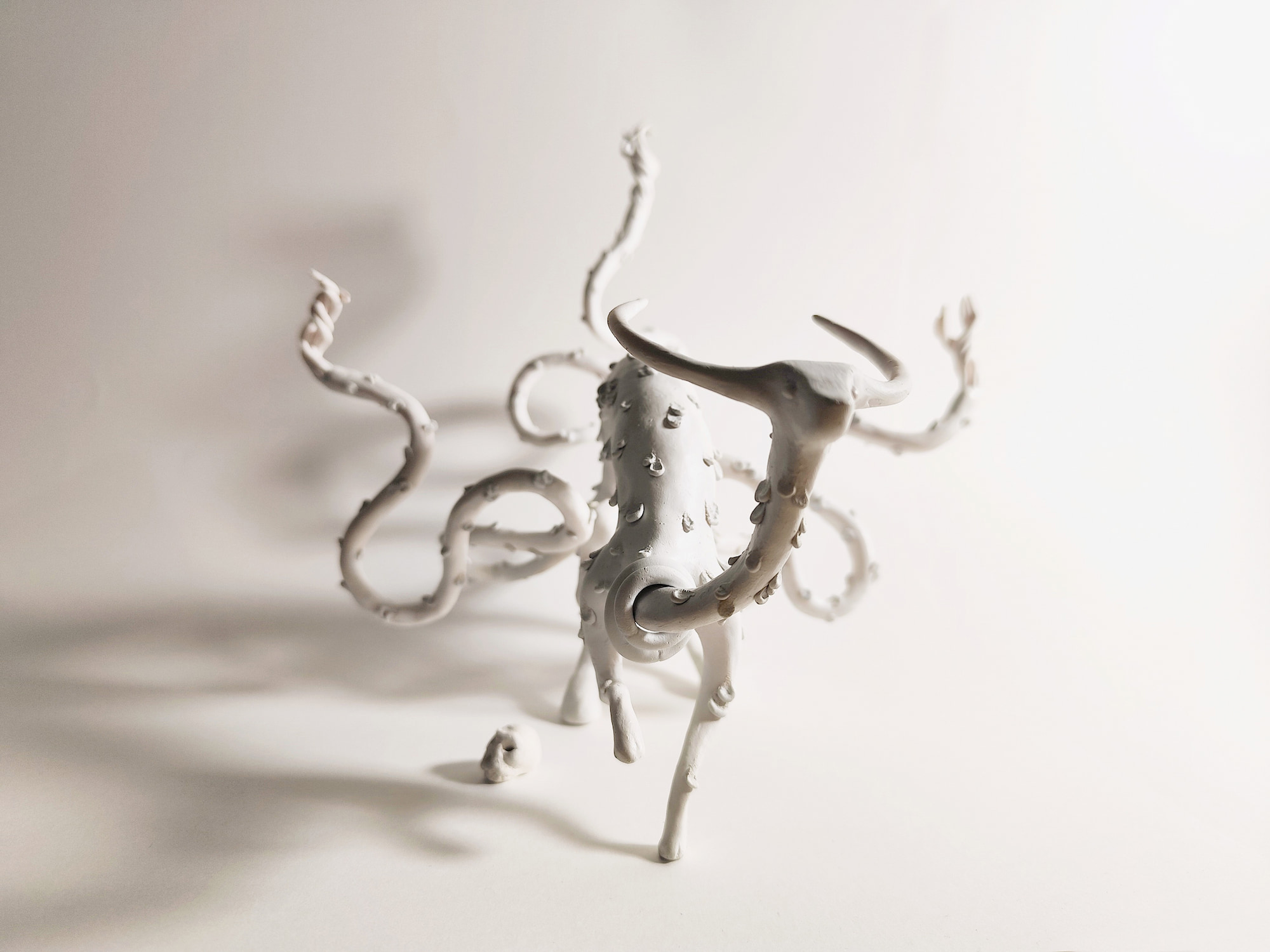
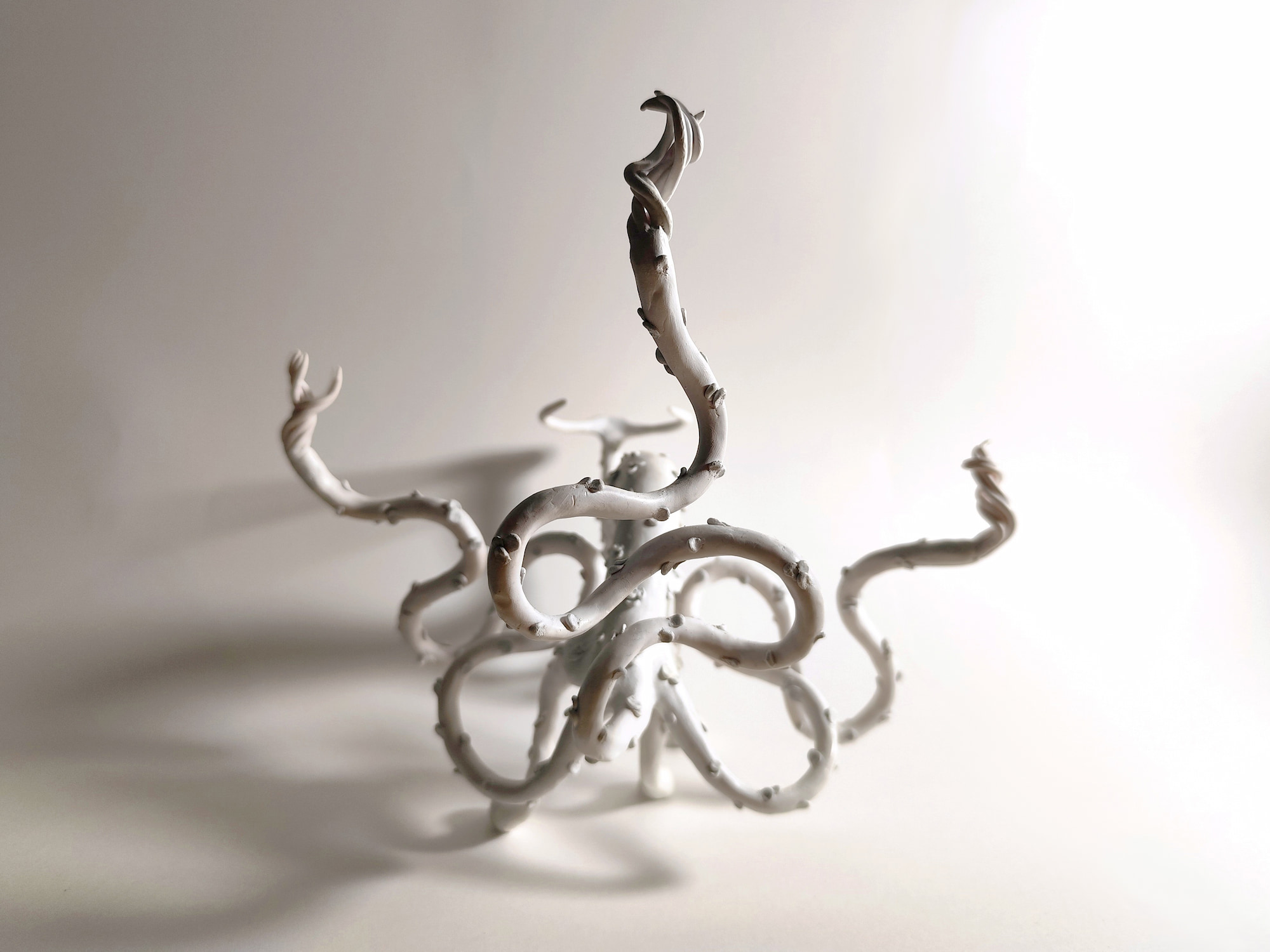
In its volumetric execution, the piece dispenses with the heavy and static mass associated with monumental statuary or traditional commemorative canons, moving away at the same time from the dense weight of the classic European dragon, markedly chthonic and linked to the heaviness of the earth. Instead, it crystallizes through a sinuous silhouette of austere whiteness and formal lightness, dialoguing directly with a high-contrast linear grammar of clear vector lineage and contemporary graphics. The curves of its anatomy project into space with a defined geometric clarity that establishes a contained grounding within the environment.
This fluid organicity coexists with a pair of collars that wrap around the body without rigid constriction, retaining a calculated looseness. Symbolically, these graphic elements operate as a visual resource translating the containment of unconscious and drive impulses through the order of reason. This formal tension formulates a reflection on the modulation of instinctive energy through precise formal structures.
V. The Guardian of the Threshold and the Contemporary Memento Mori
At the core of the proposition lies its defining function: the agency of the guardian. Throughout art history, human finitude has traditionally materialized through a familiar lexicon of memento mori tropes, ranging from anatomical skulls and emptying hourglasses to Dutch Golden Age vanitas still lifes laden with decaying matter. These conventional motifs were designed to remind the viewer of the ephemeral nature of life through a direct confrontation with caducity.
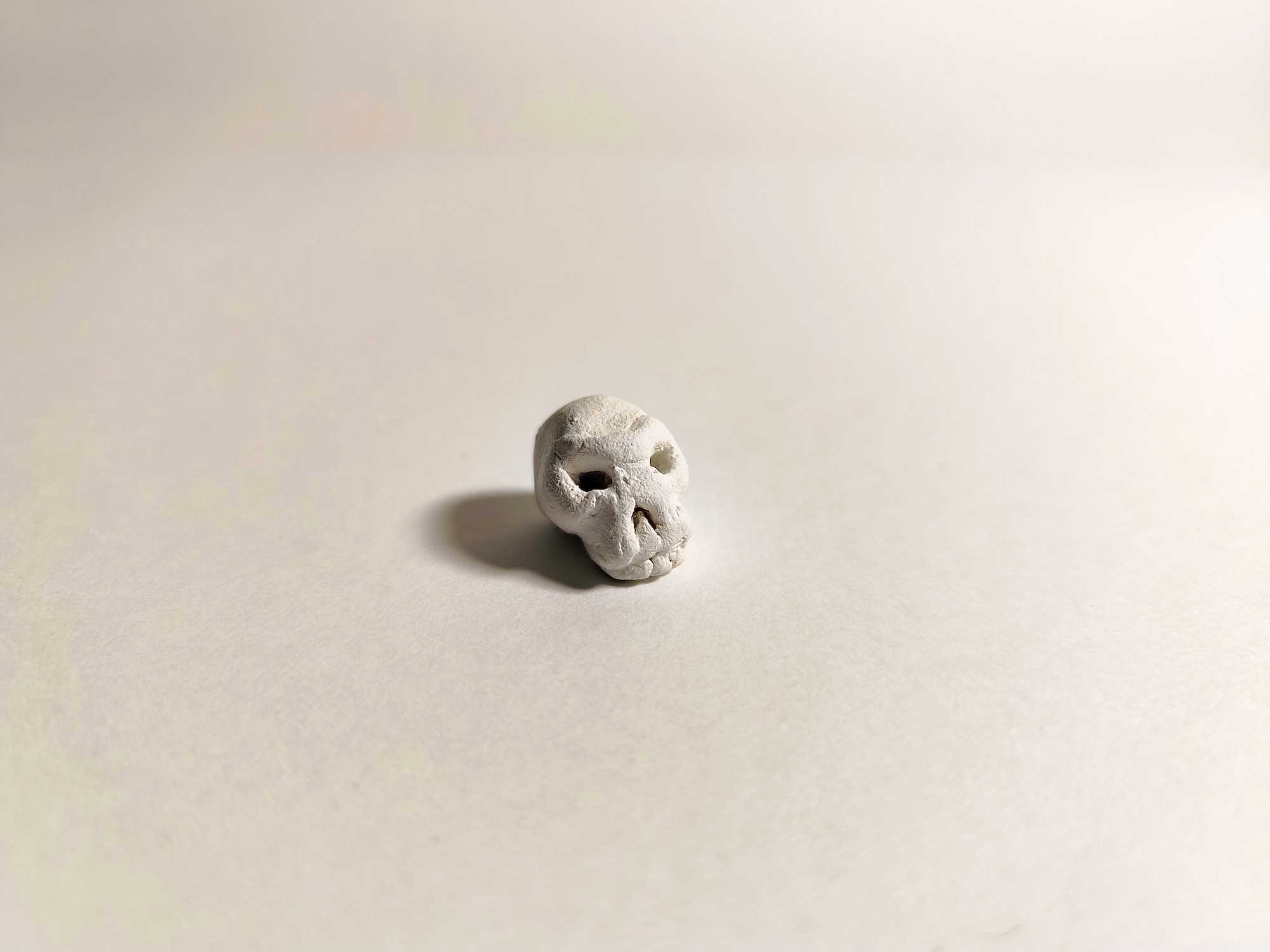
This sculpture reinterprets the tradition of the memento mori by shifting it to the coordinates of the present through the explicit presence of a modeled skull resting on the floor next to the creature. Here, the guardian's corporality does not protect a material treasure or a geographical domain; its symbolic task is the administration and stewardship of death itself. The entity watches over the certainty that the termination of life constitutes a constitutive factor of subjectivity that all existence must process. The dragon mounts guard over the fundamental truth that every subject must eventually confront their own end. By relocating the vital outcome under the protection of this sentinel, the work strips the concept of its paralyzing terror to redefine it as an indispensable step, forcing a direct confrontation with that which the current productive machinery prefers to relegate to invisibility.
VI. Scale, Fragmentation, and the Liminal Space of Thought
This philosophical meditation on the scale of human experience finds its spatial amplification in the configuration of the sculpture from two pieces. Next to the main, sinuous body of the guardian lies the tiny, isolated fragment of the skull, generating a deliberate metric dissonance that exposes the deep rift between the monumental constructions of the collective unconscious and the extreme vulnerability of the physical corporeal support.
Through this spatial arrangement, the exhibition environment transforms into a liminal territory for contemplative reading. In this space of suspension, matter and concept converge to neutralize the idle consumption of images through the invocation of two of humanity's oldest representations, the dragon and the skull, restoring to the individual the clear, sober lucidity of their own finitude. The work thus consolidates itself as a critical mechanism confronting the foundational limits of human experience and accompanying our presence in the world.