
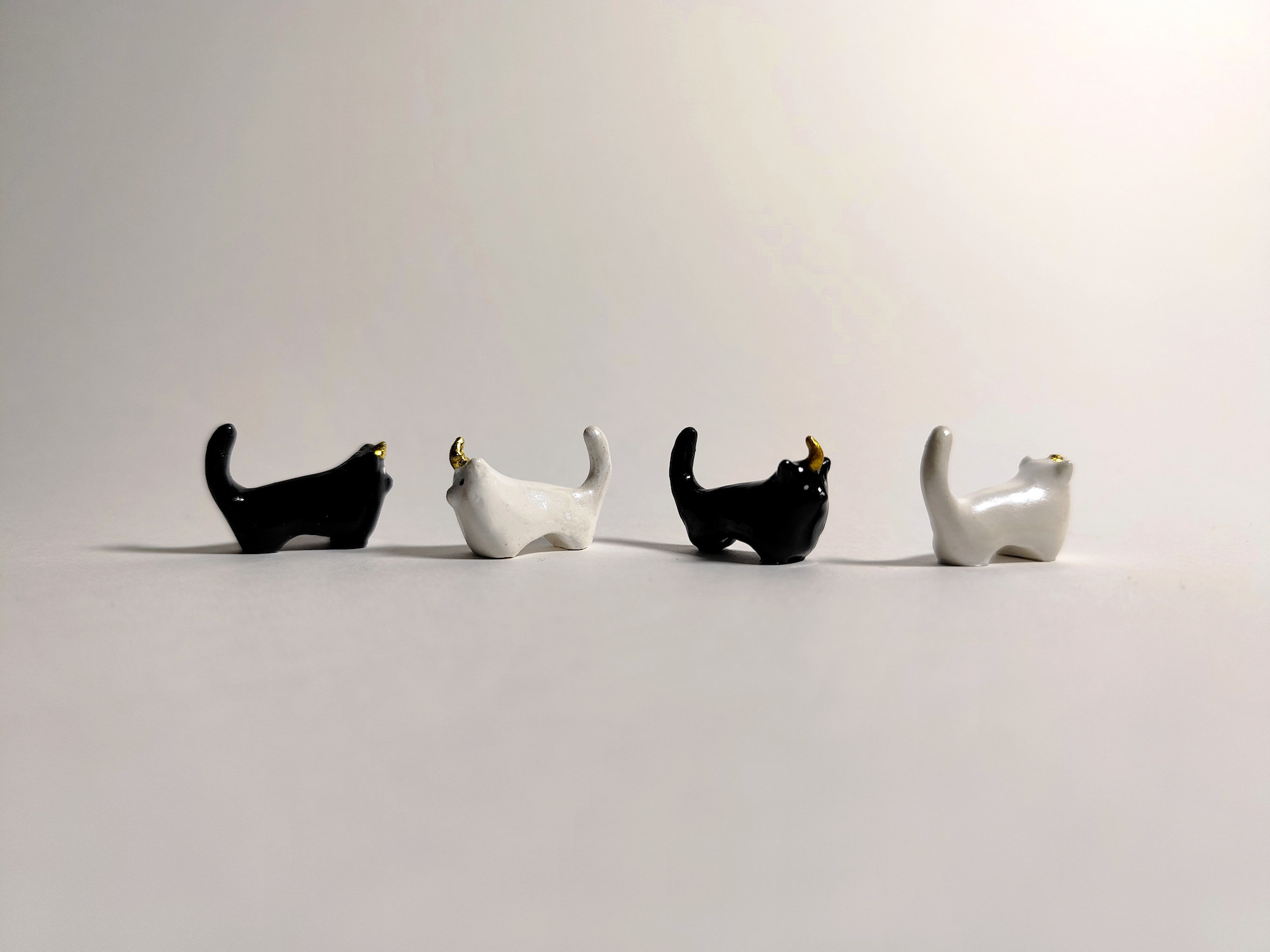
The Unicorn Cats: Nigredo and Albedo
Blanca de la Torre
Polymer medium, composition gold leaf, and acrylic paint.
1.8 x 2.9 x 1 cm.
2026
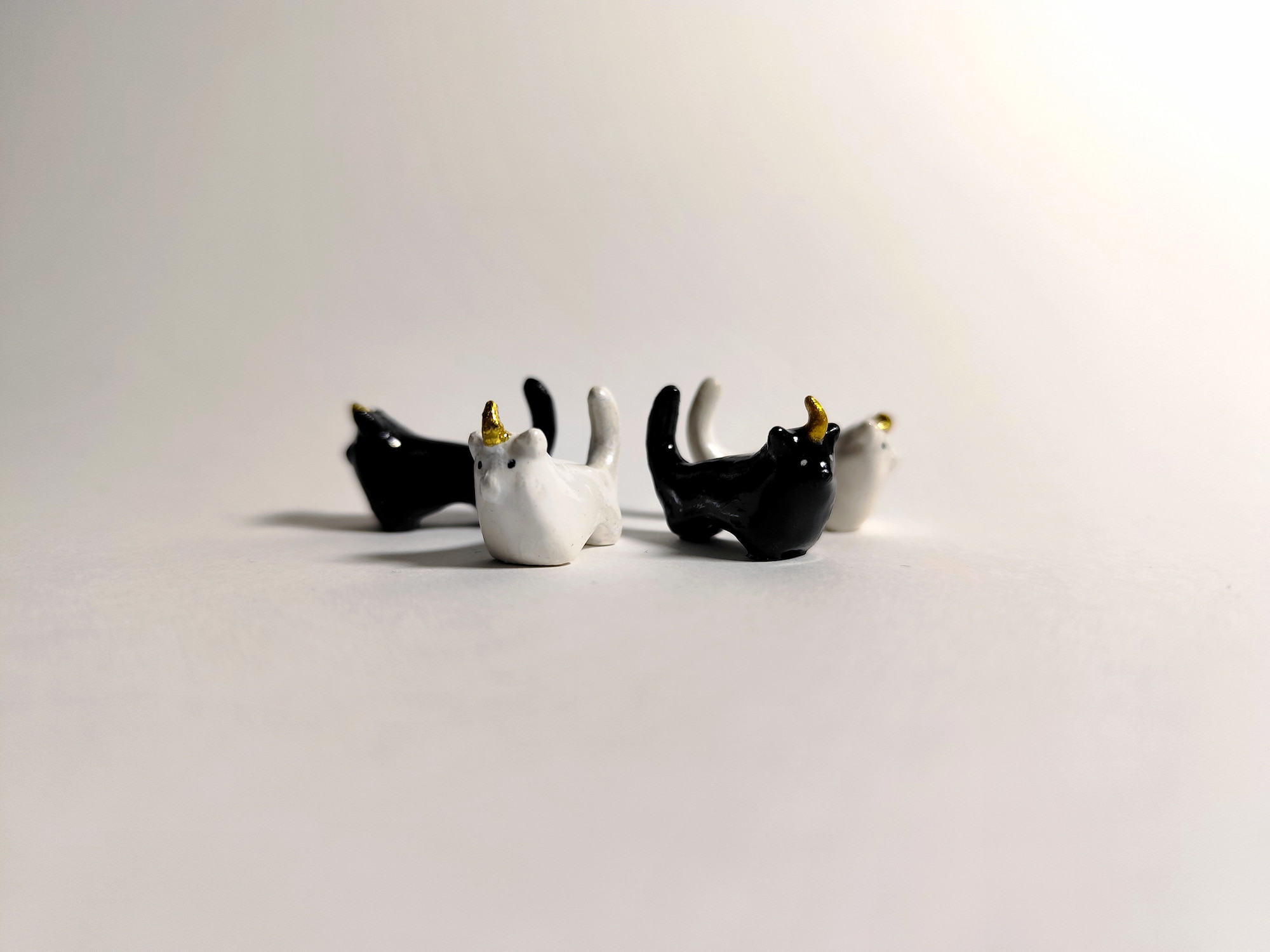
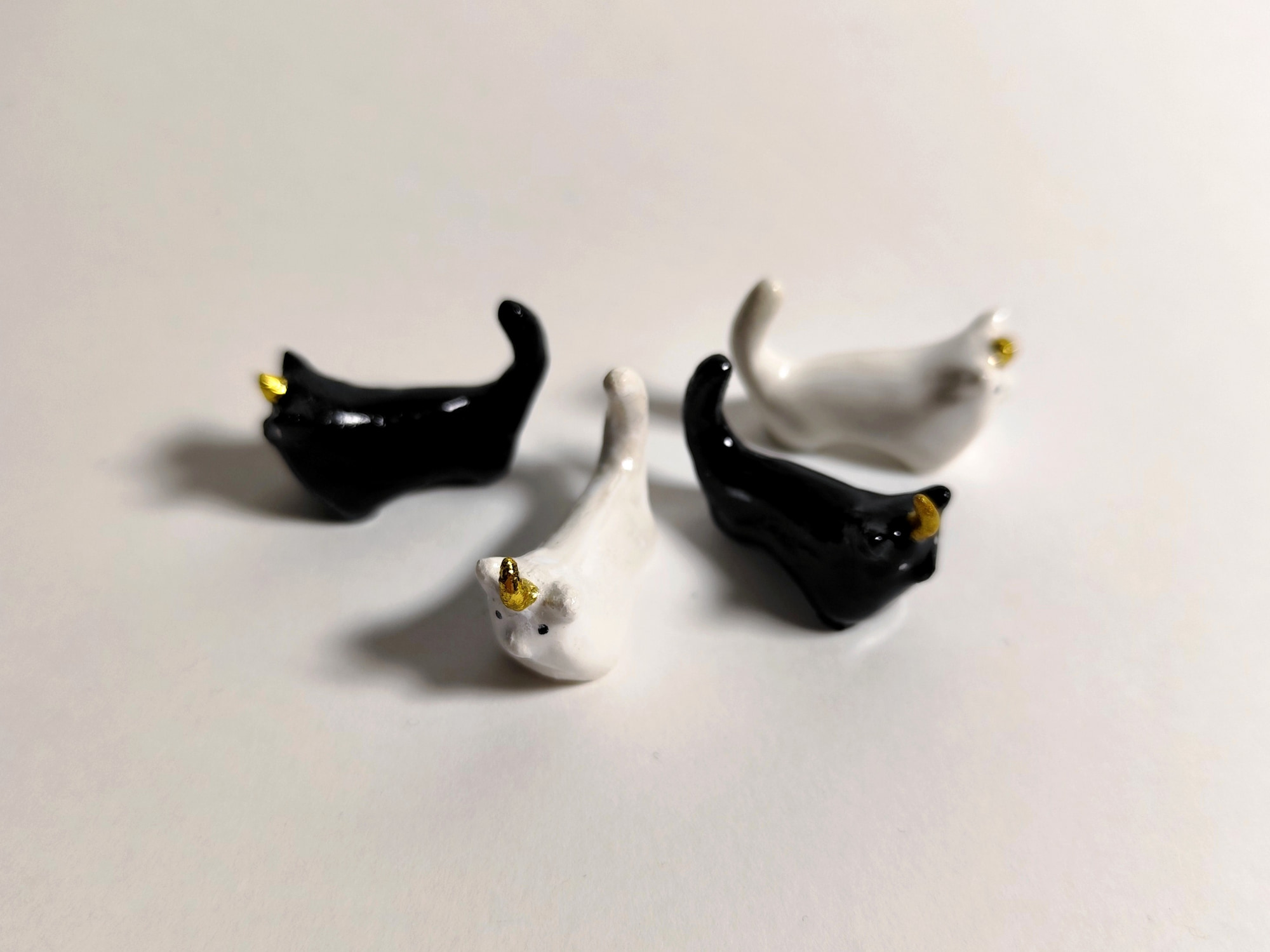
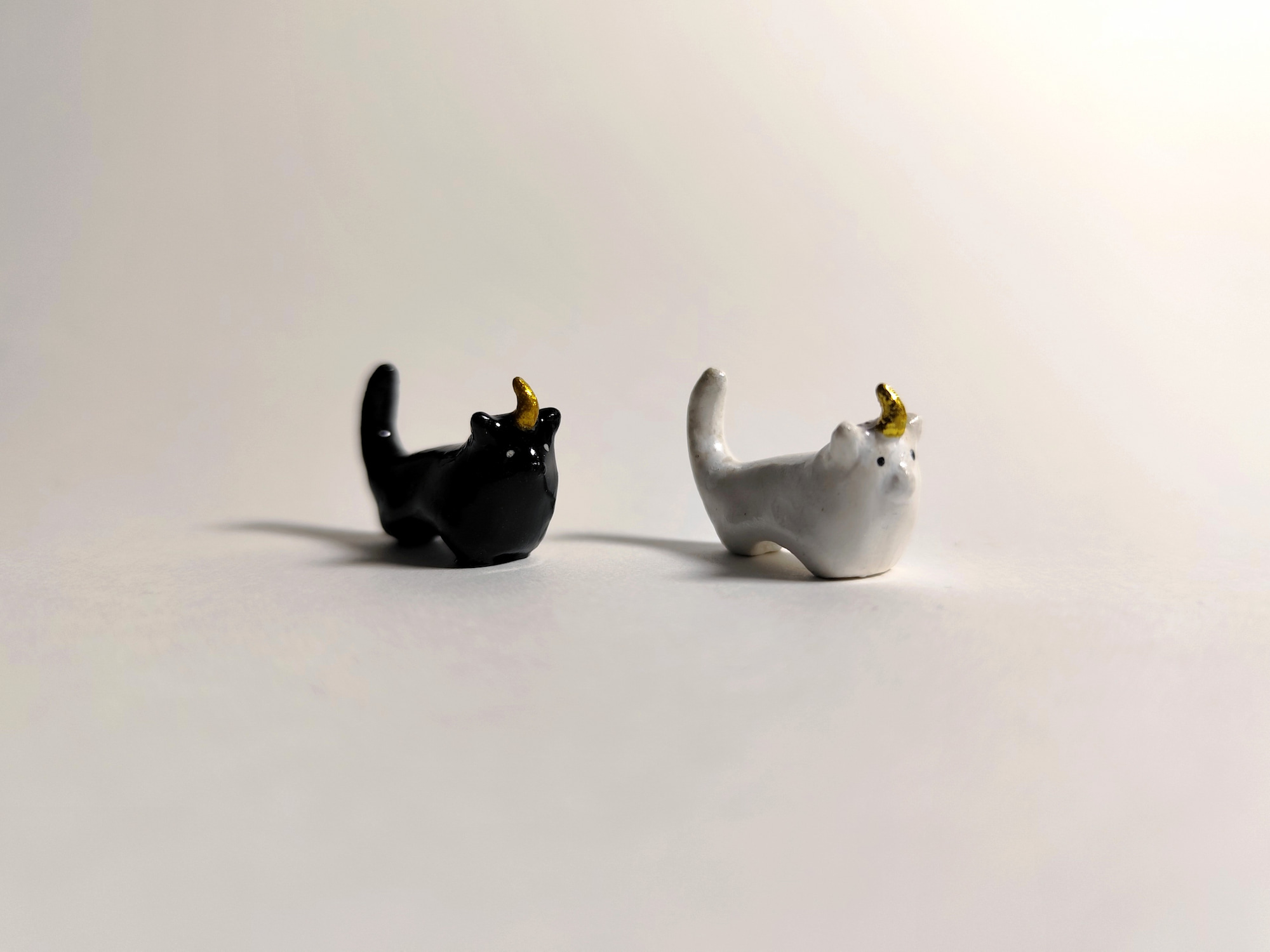
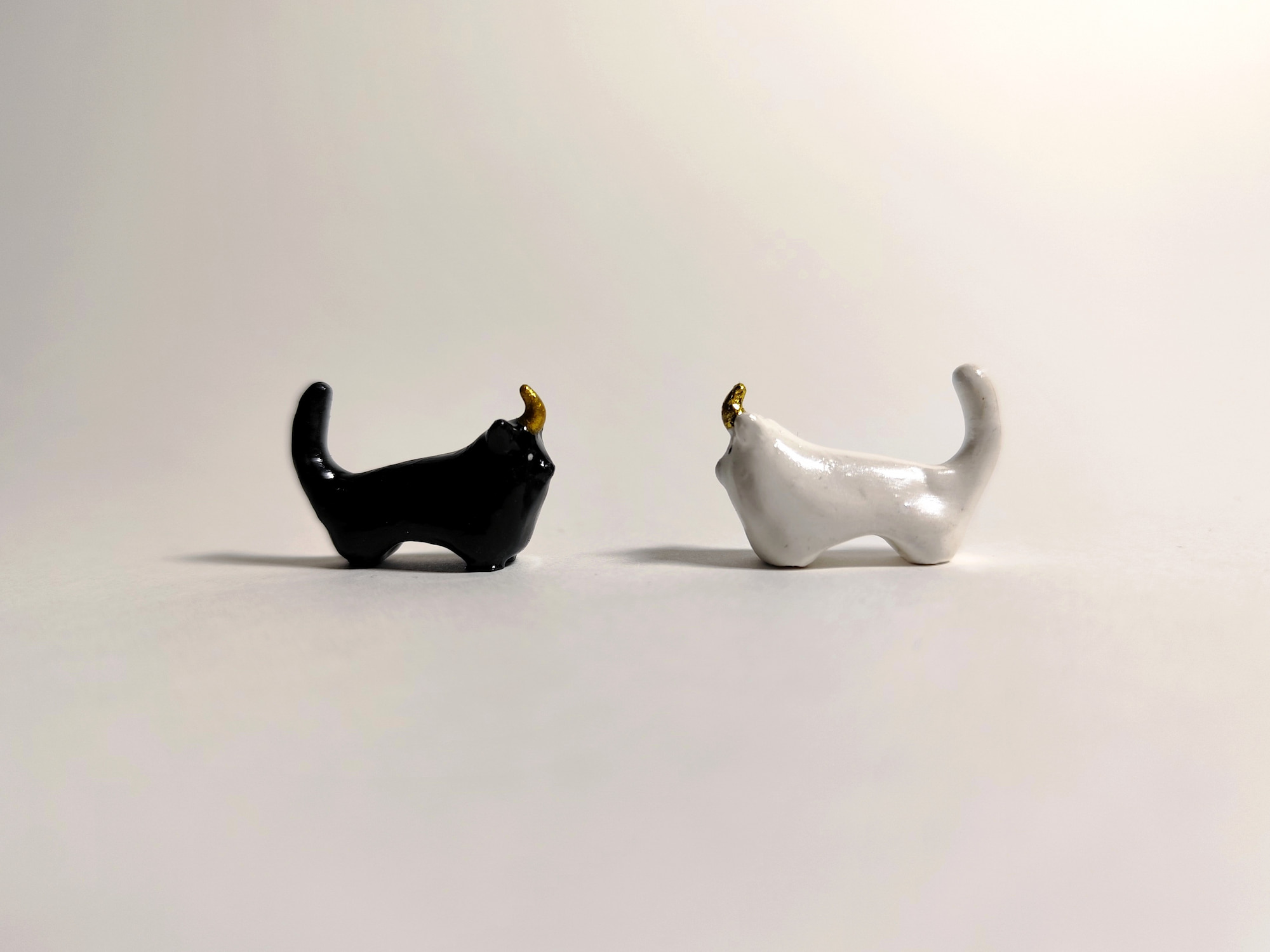
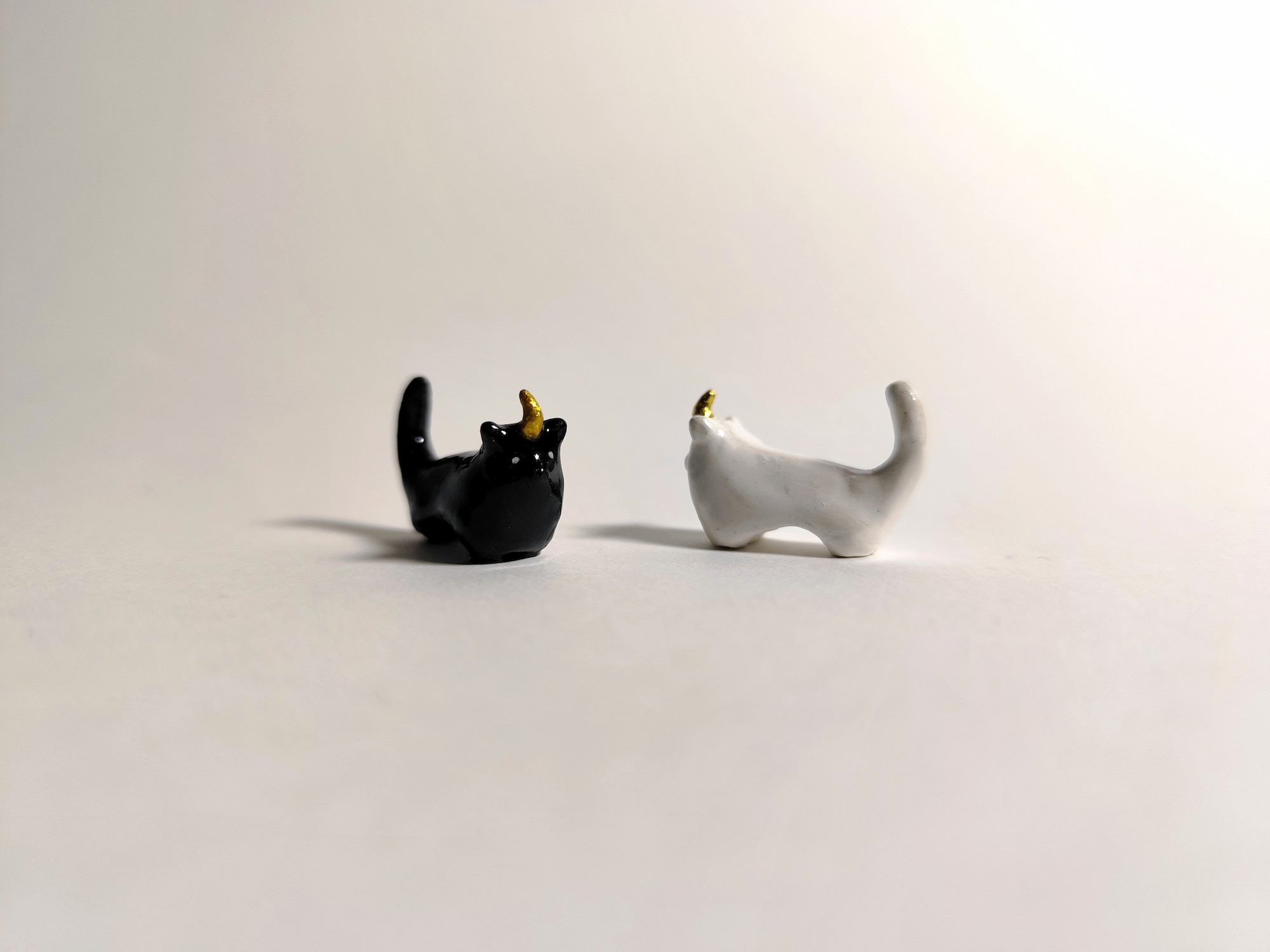
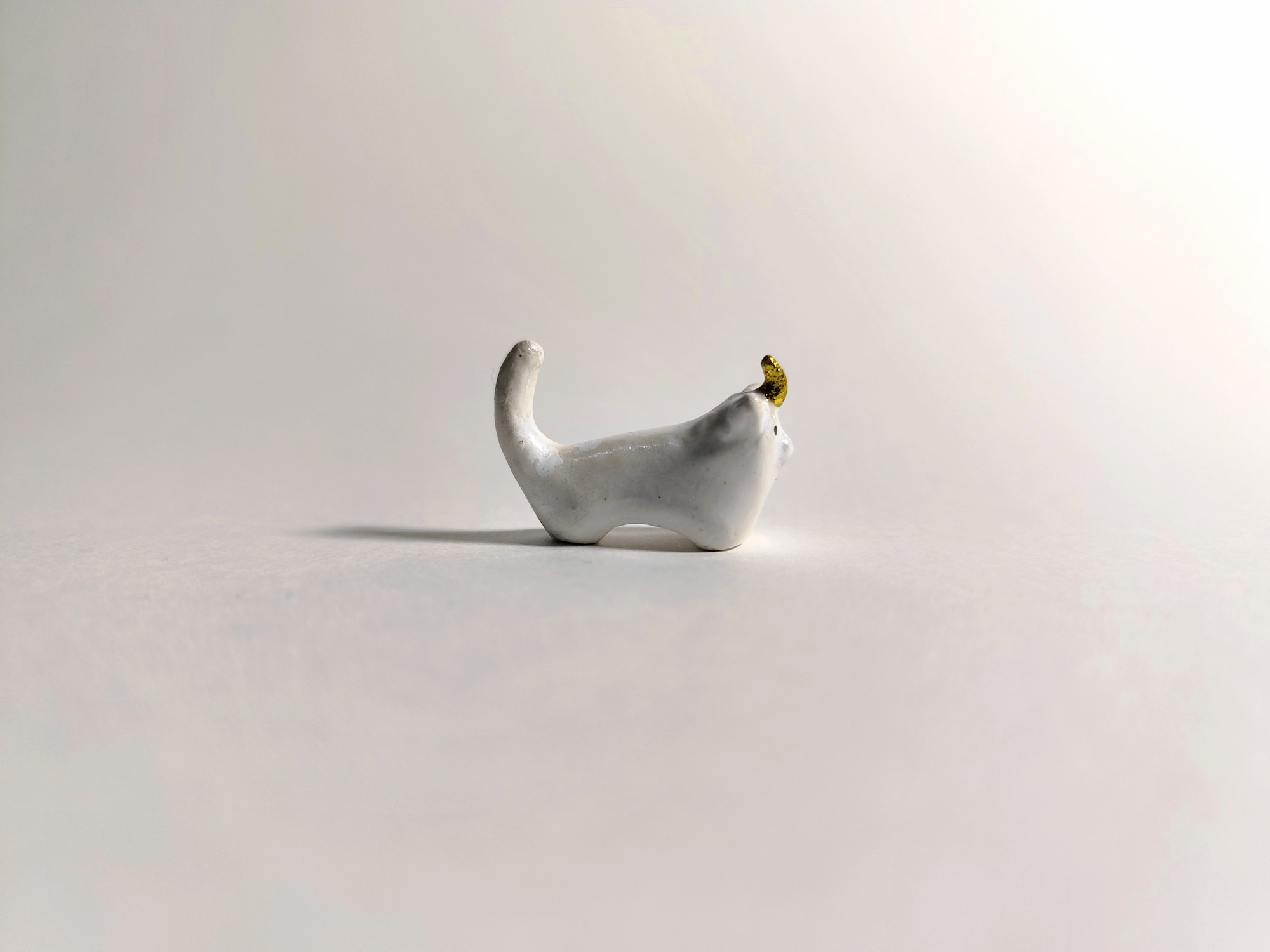
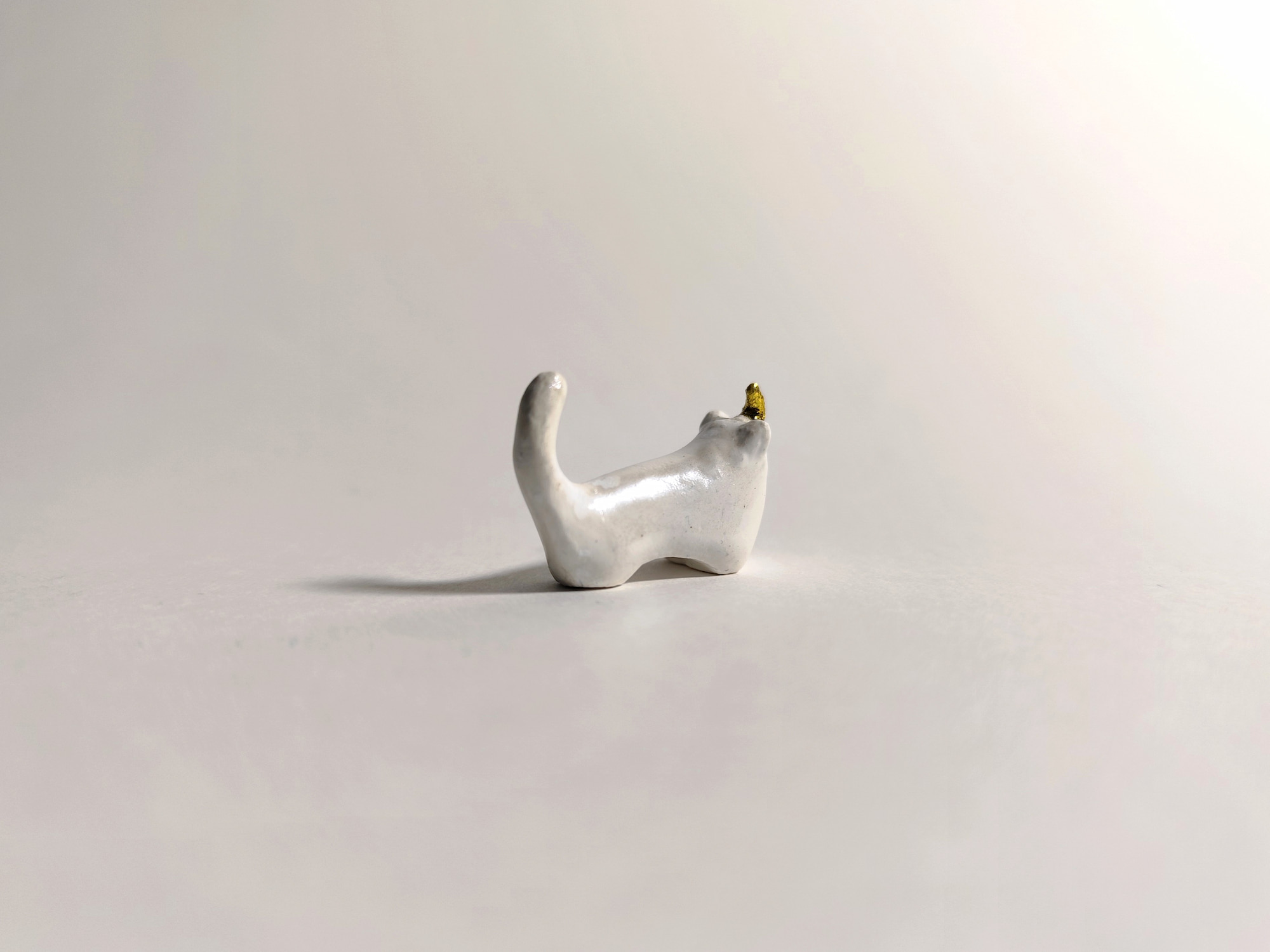
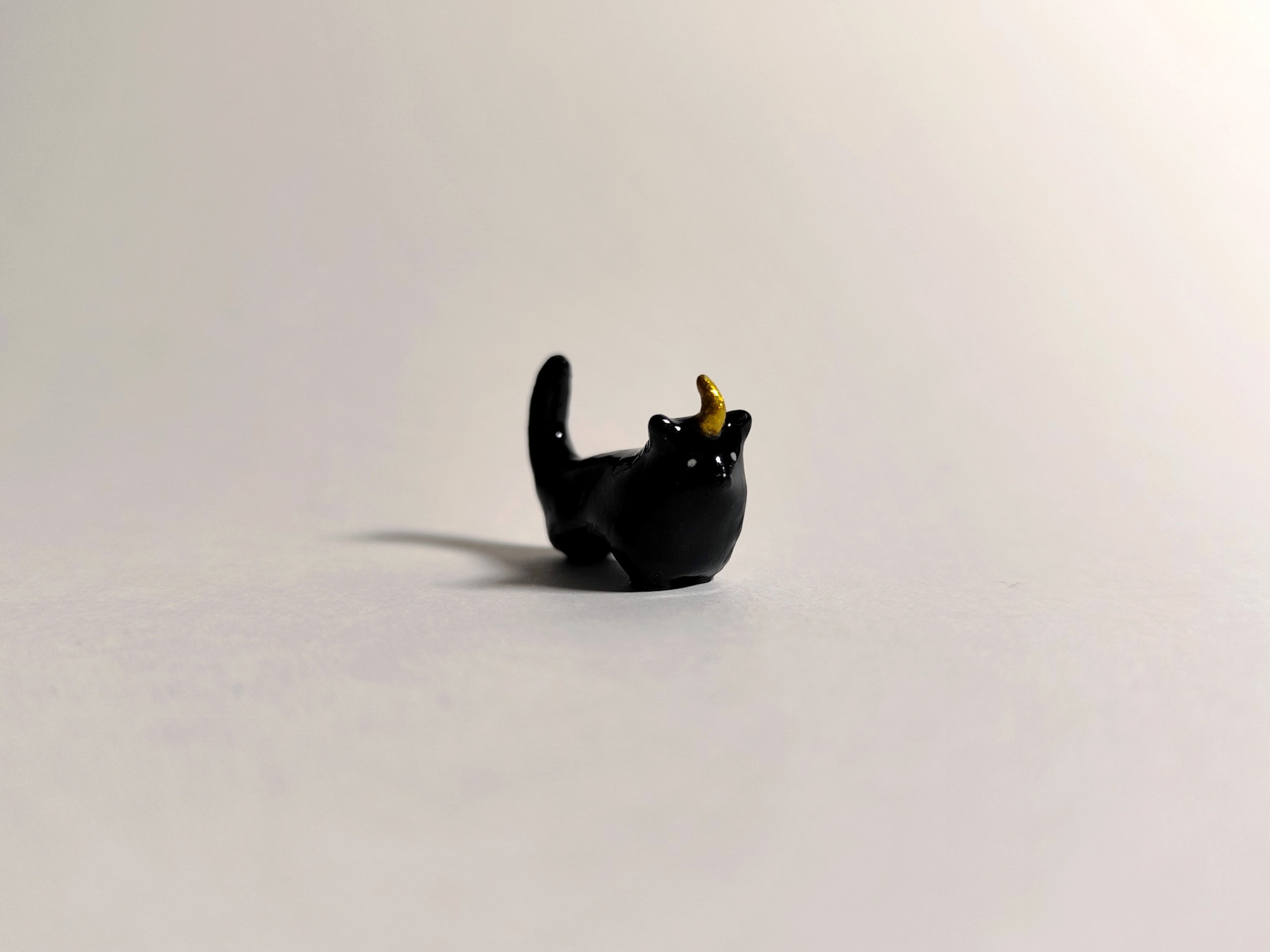
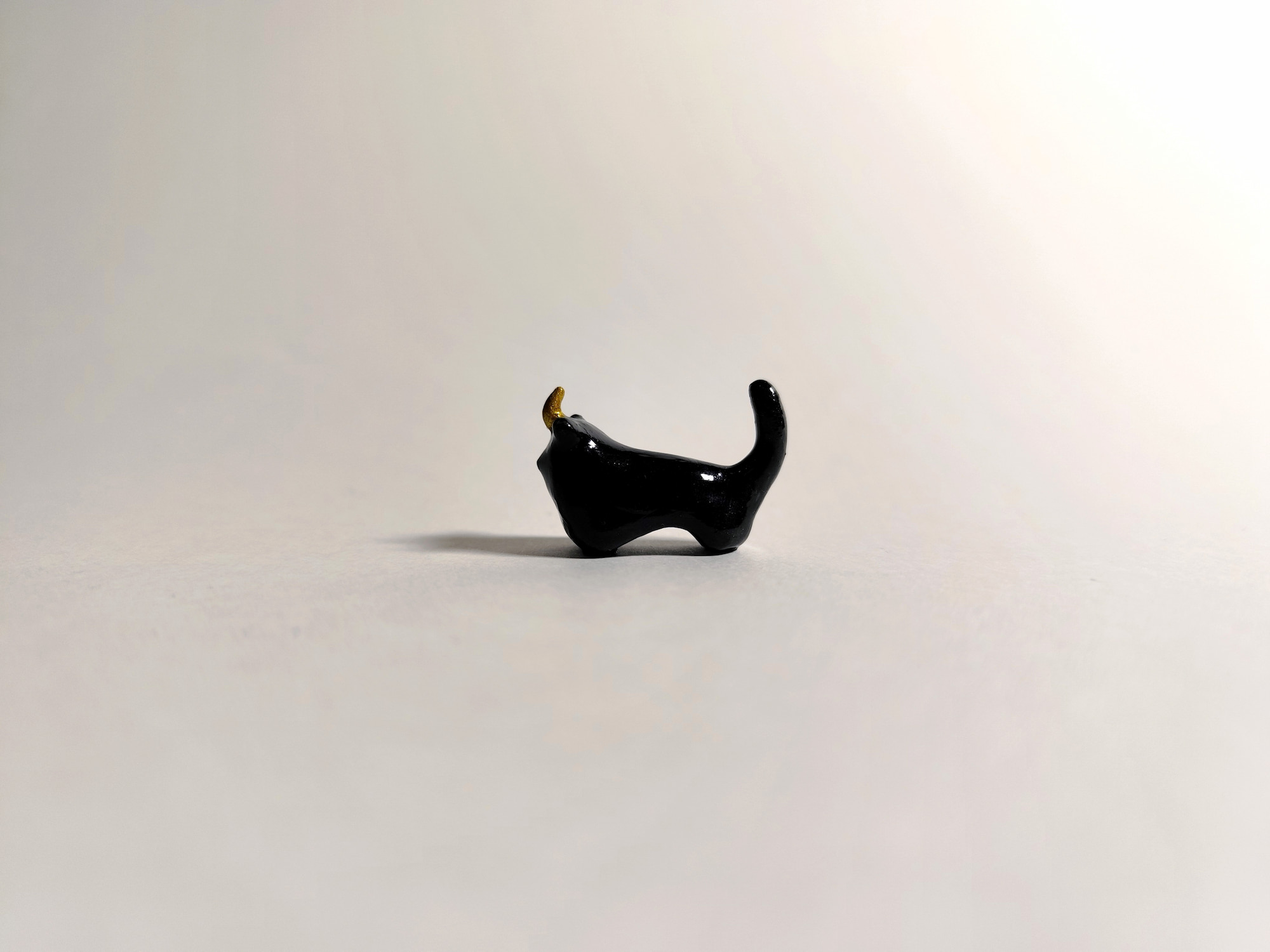
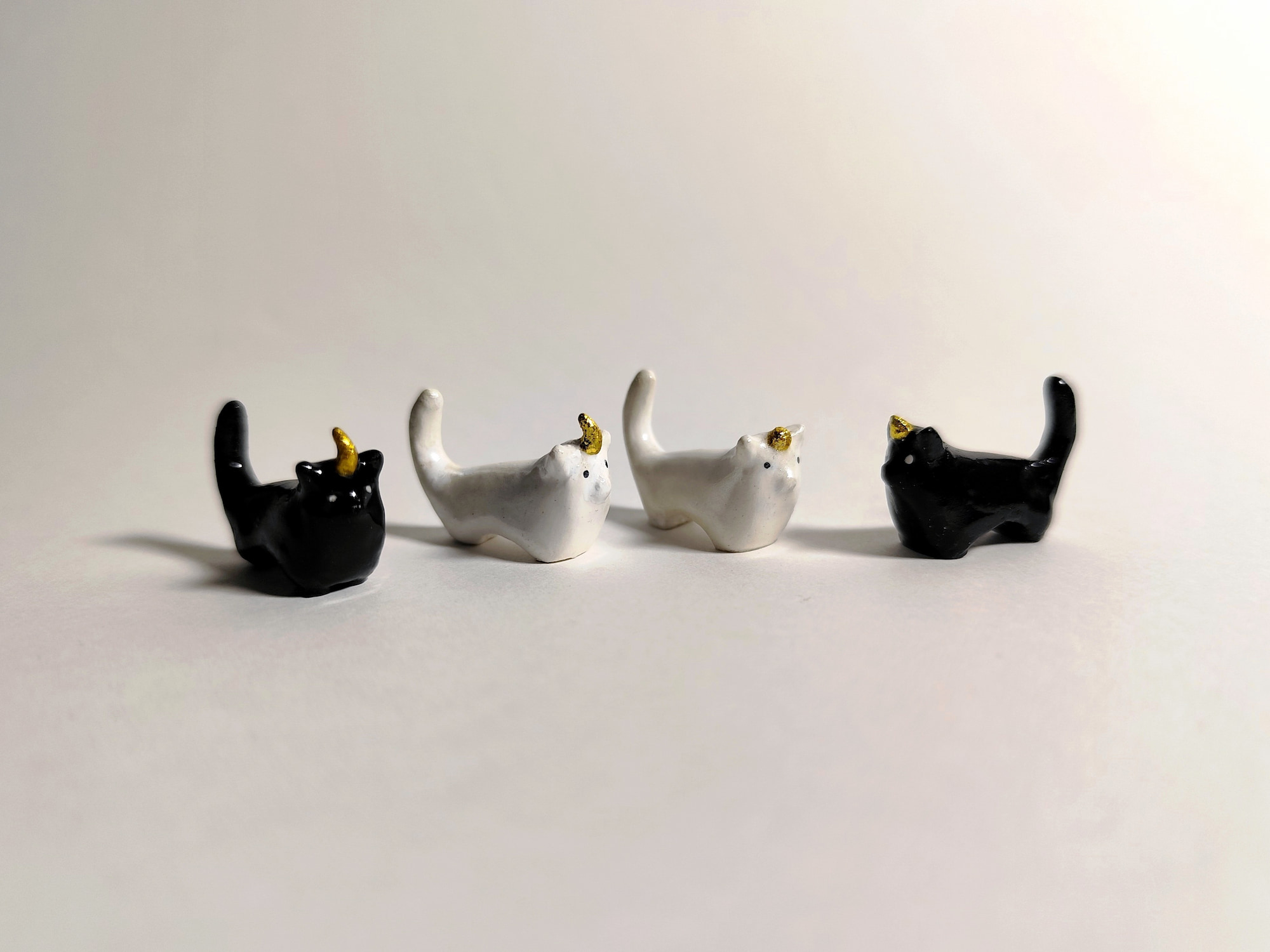
"Neither light nor darkness walks alone: each requires the other to reveal its true nature.
In each feline of jet and chalk, a golden horn acts as a vessel for wild instinct and an axis of order between opposites, keeping the pulse of myths that still transmigrate among us."
The Unicorn Cats: Nigredo and Albedo
Conceptual Rationale and Proposition
I. Multiplicity and Psychic Fragmentation
The Unicorn Cats: Nigredo and Albedo is structured as a modular installation comprising a series of small feline figures articulated in a stark chromatic dichotomy of glossy black and white. The work does not postulate the representation of an isolated individuality, but rather the configuration of a swarm of perceptual vectors in constant formal and spatial interaction.
In the analysis of symbolic structures, the proliferation and seriality of a single morphological entity signals the fragmentation of the subject into autonomous complexes. The units making up this installation function as small spatial markers or psychic totems inhabiting the visual field, operating independently before joining a system of synthesis or integration within the totality of the self.
II. Feline Morphology and Instinctual Dynamics
Within the plastic economy of the series, the anatomy of the cat is adopted as a morphological support linked to fluidity, perceptual autonomy, and primary nature. The feline figure embodies an ability to move silently through zones of penumbra, operating as a metaphor for an intuition that evades the rigid schematization of logical thought.
In religious history and visual anthropology, this figure has oscillated between sacralization and boundary status. In the Egyptian horizon, the goddess Bastet articulated the transition between domestic protection and atavistic violence embodied by Sekhmet, illustrating how a single biological matrix can channel both the stability of order and destructive power. Similarly, in Japanese folklore, typologies such as the Bakeneko or Nekomata ascribe to the feline a capacity for mutation and resistance against social encoding. The work adopts this formal ambivalence to deploy across space a series of volumes where chromatic contrast makes explicit the polarity between light reflection and absolute absorption.
III. The Monocular Appendage: Vector of Ordering and Structural Logic
Grafted onto the feline matrix is the morphological attribute of the unicorn: a single horn with a gold finish emerging along the frontal axis. In the evolution of forms and the history of ideas, the Monoceros or unicorn operates as a vector of mental penetration, synthesis, and direction. Against the horizontal, diffuse nature of the feline body, the horn establishes a vertical axis of analytical order.
The genealogy of this symbol extends from ancient classical zoological chronicles (where authors like Ctesias or Pliny the Elder recorded the Monoceros as an indomitable creature whose attributes neutralized the toxicity of waters) to Eastern traditions such as the Qilin, where the hybrid creature embodies the harmony of opposing principles. In European medieval iconography and textile art, such as The Lady and the Unicorn tapestry cycle, the creature represents the refinement of the senses and the apprehension of the immaterial. By integrating this golden appendage into each figure of the swarm, the sculpture introduces an organizing principle that neutralizes instinctual dispersion, acting as a core of analytical condensation upon the bodily mass.
IV. Alchemical Polarity and Spatial Syntax: From Solve et Coagula to the Correspondence of Opposites
The title of the installation articulates the iconographic repertoire of the alchemical tradition as a lexical system for formal analysis, operating as a historical precedent for material research and the psychology of forms to map the stages of plasticity and the transformation of mental structures. Within this spatial syntax, the maxim Solve et Coagula (dissolve and coagulate) is adopted as a dynamic model of plastic organization.
The figures finished in jet black materialize nigredo and execute the function of Solve: a visual signifier coding the phase of dissolution, analytical deconstruction, and primordial chaos in which the parts of the psyche remain disarticulated, marking the necessary passage through the Shadow to enable the restructuring of the whole. In strict contrast, the units finished in pristine white operate as the visual correlative of albedo and activate the function of Coagula: the plastic index of purification, fixation, and the reorganization of fragmented experience into a clean, stable structure.
The coexistence of both blocks within the exhibition space articulates a dialectical oscillation where light and darkness operate as complementary values within the same linguistic and material circuit. The golden appendage functions as the structural axis where opposing forces balance out, projecting in a latent state the final phases of this visual syntax: citrinitas, or the expansion of consciousness, and rubedo, or the ultimate consolidation of individuation (Self).
V. Archetypes of Collective Surveillance in Visual Culture
On the plane of cultural mythology and historical iconography, the figure of the cat is linked first and foremost to the witch's familiar, fulfilling the anthropological role of psychopomp and weaver of worlds, a liminal entity capable of traversing and connecting disparate planes of reality. This capacity to mediate between strata of consciousness is reactivated within the installation's swarm as a communication device between the visible and the submerged.
This same mediating condition and collective surveillance find solid correspondences in literature and contemporary visual culture. In H.P. Lovecraft's tales, such as The Cats of Ulthar, feline communities operate with a collective logic capable of exercising implacable guardianship over the territory they inhabit. The sculptural units in this series adopt that same quality of a collective body, functioning as guardians of a fragmented mental space. This chromatic duality and intuitive guidance was reinterpreted in mass culture by series such as Sailor Moon through the figures of Luna and Artemis, whose frontal markings signaled their role as regulators of destiny. Similarly, Lewis Carroll's Cheshire Cat embodies paradox and the destabilization of the rational ego. Finally, the figure of the unicorn as a beacon of distinction and uncorrupted identity echoes in both the allegorical literature of Peter S. Beagle (The Last Unicorn) and the critical science fiction of Ridley Scott (Blade Runner), where the origami unicorn acts as an interrogation into the authenticity of memory and the construction of the subject.
VI. The Technological Swarm: Neoteny, Algorithms, and the Posthuman Network
From a strictly contemporary perspective, the serial multiplication of these hybrids transcends traditional archetypal frameworks and transforms by incorporating new codes, such as those derived from internet culture and memes. It is essential to note that the sculpture does not feature explicit cybernetic devices or digital components in its physical construction; the technological dimension resides not within the object itself, but within the inevitable mutation of the symbol that the viewer's gaze projects upon encountering the work. In contemporary reception, the anatomy of the cat, the figure of the unicorn, and the structure of the swarm are organically loaded with new semantic layers.
On one hand, the sleek, miniature aesthetic of the pieces appeals to neoteny (the retention of juvenile traits to disarm threat), a formal strategy that digital culture has instrumentalized through the feline image as an affective interface and emotional refuge. In the current context of information saturation, the cat consolidates itself as the core of online iconography, masking invisible dynamics of surveillance and data extraction. On the other hand, the figure of the unicorn, widely replicated across memes, video games, digital platforms, and mass media, is projected in the viewer's mind as an emblem of commercial hyper-visibility and, simultaneously, as the financial signifier of tech startups and the promise of hyper-valuation.
In this manner, the work seeks to prompt a reflection on the acceleration with which contemporary iconography transforms. The cat and the unicorn operate as exponents of the most widely circulated symbols within the digital ecosystem, dispersed across a multiplicity of images that permeate daily life like a legion. Through this dynamic, the piece confronts the observer with the speed at which current culture absorbs and commodifies ancient myths. Far from being an inherently negative phenomenon, this mutation is understood as an organic evolution of the symbol and the projections society places upon it. Nevertheless, in the face of passive data processing, the installation underscores the necessity of maintaining a resilient internal sovereignty and intimacy against the invisible currents operating unreflectively throughout everyday life.