
The Altar
Blanca de la Torre
Polymer medium, acrylic paint, and aluminum armature.
Two-piece installation. Piece 1: 10 x 9.5 x 7 cm; Piece 2: 0.5 x 2.2 x 1 cm.
2026
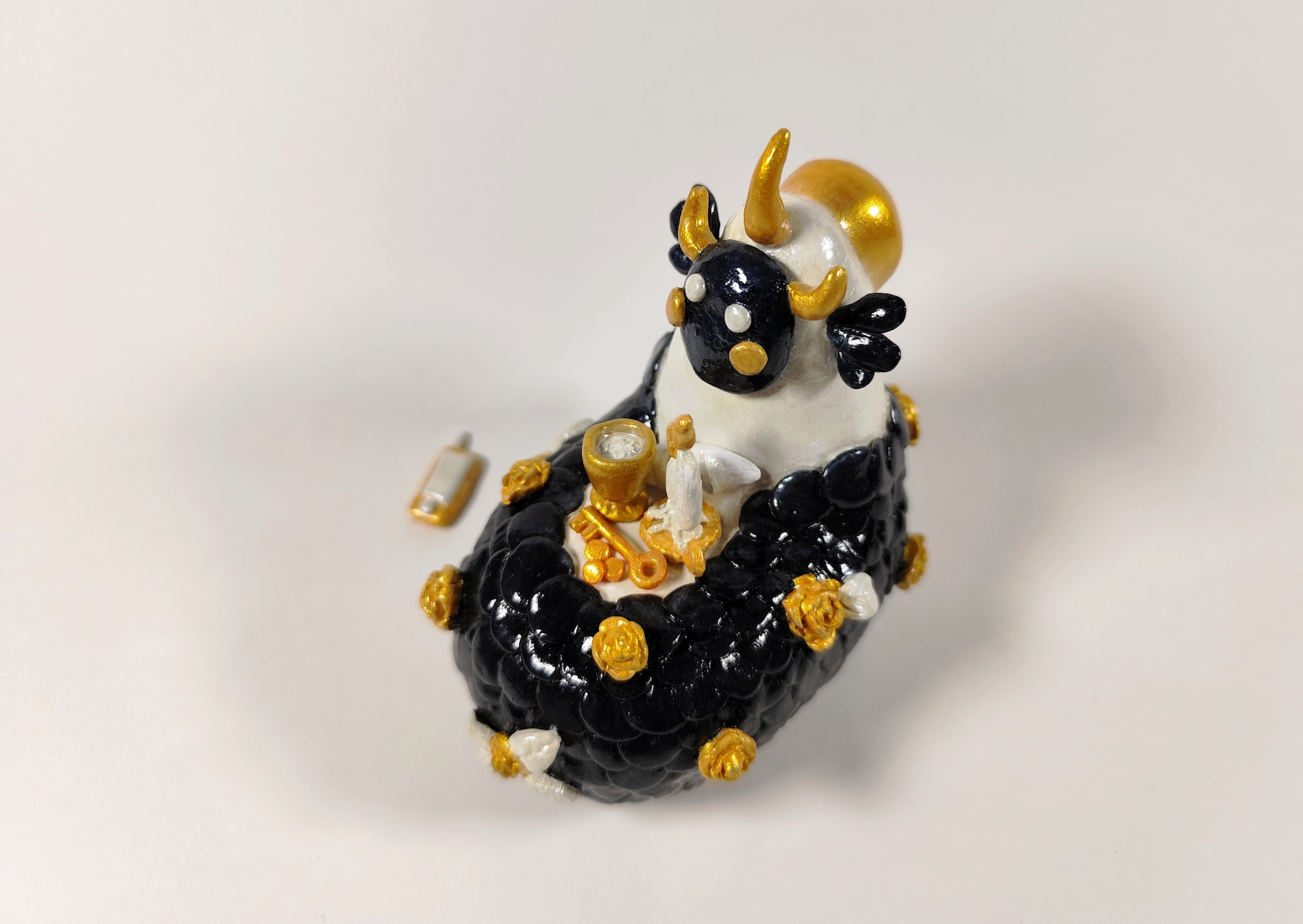
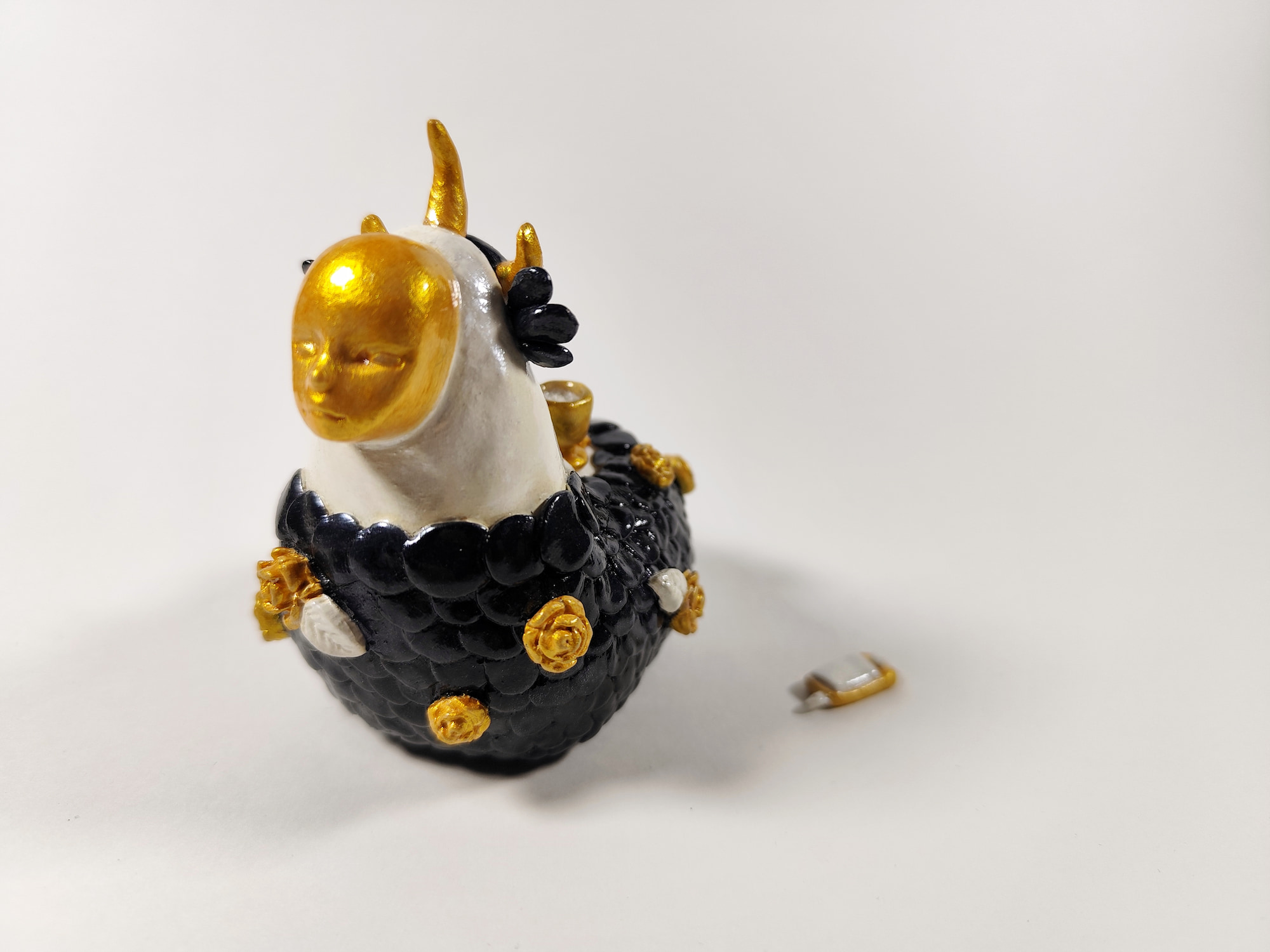
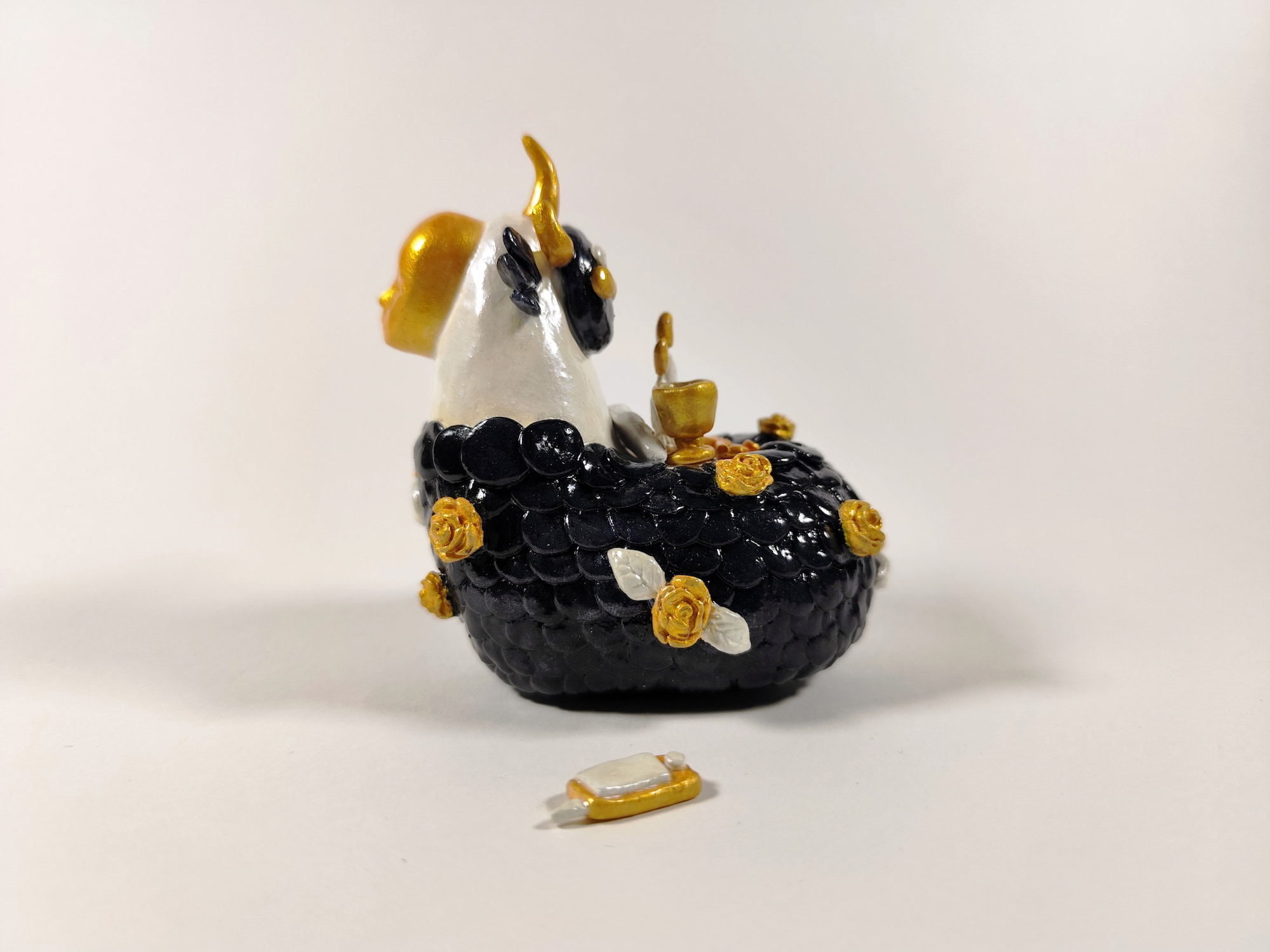
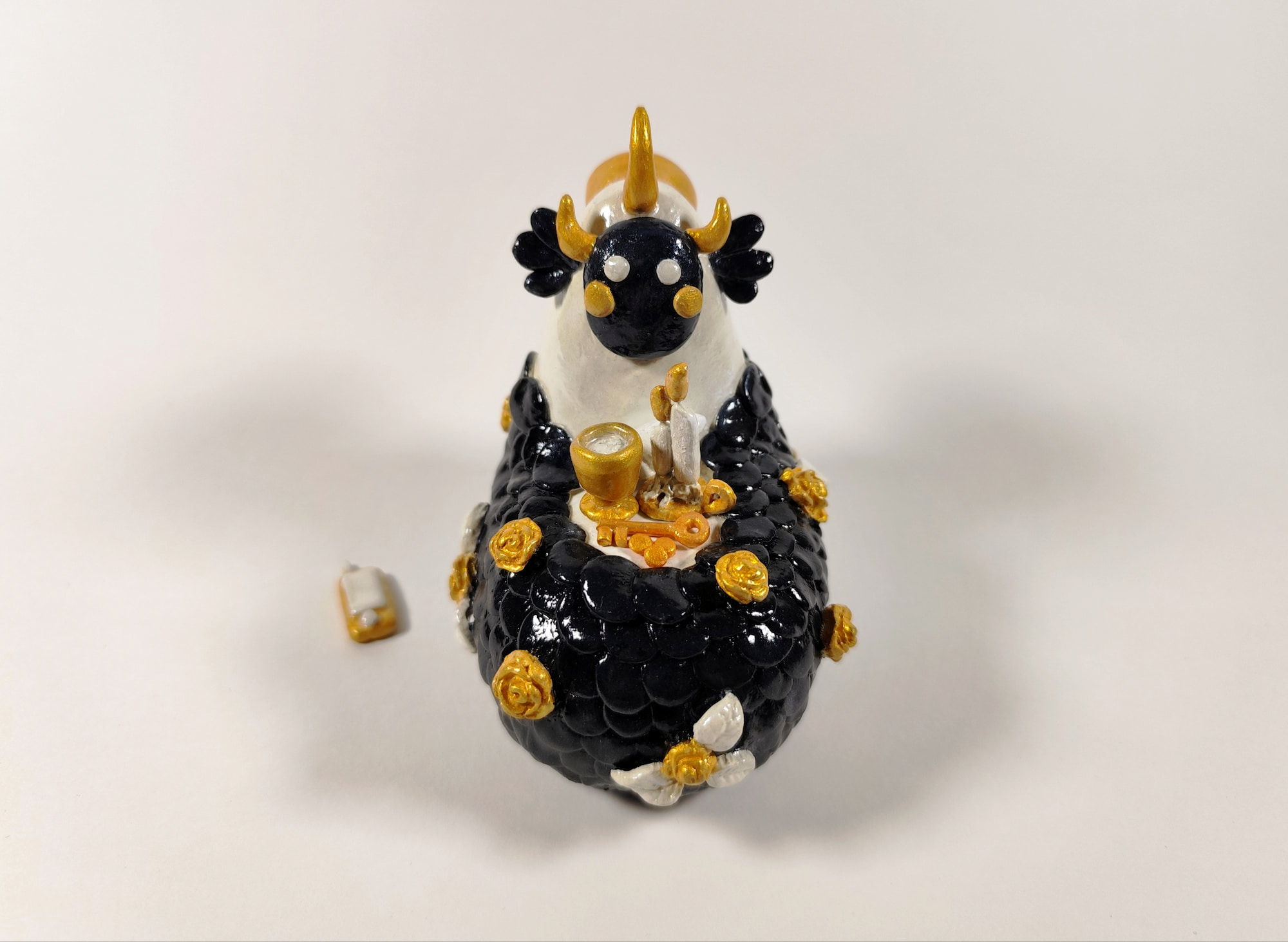
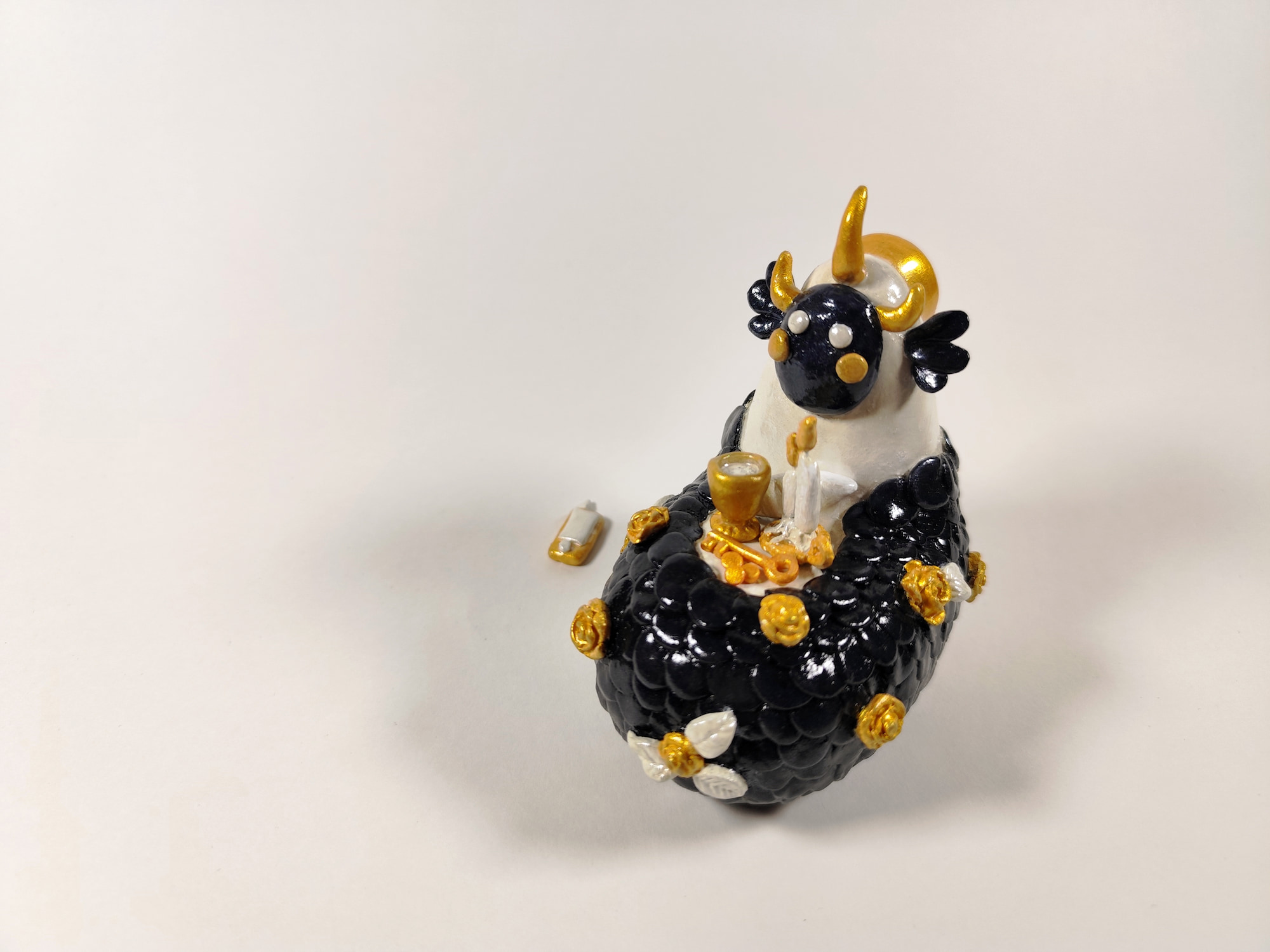
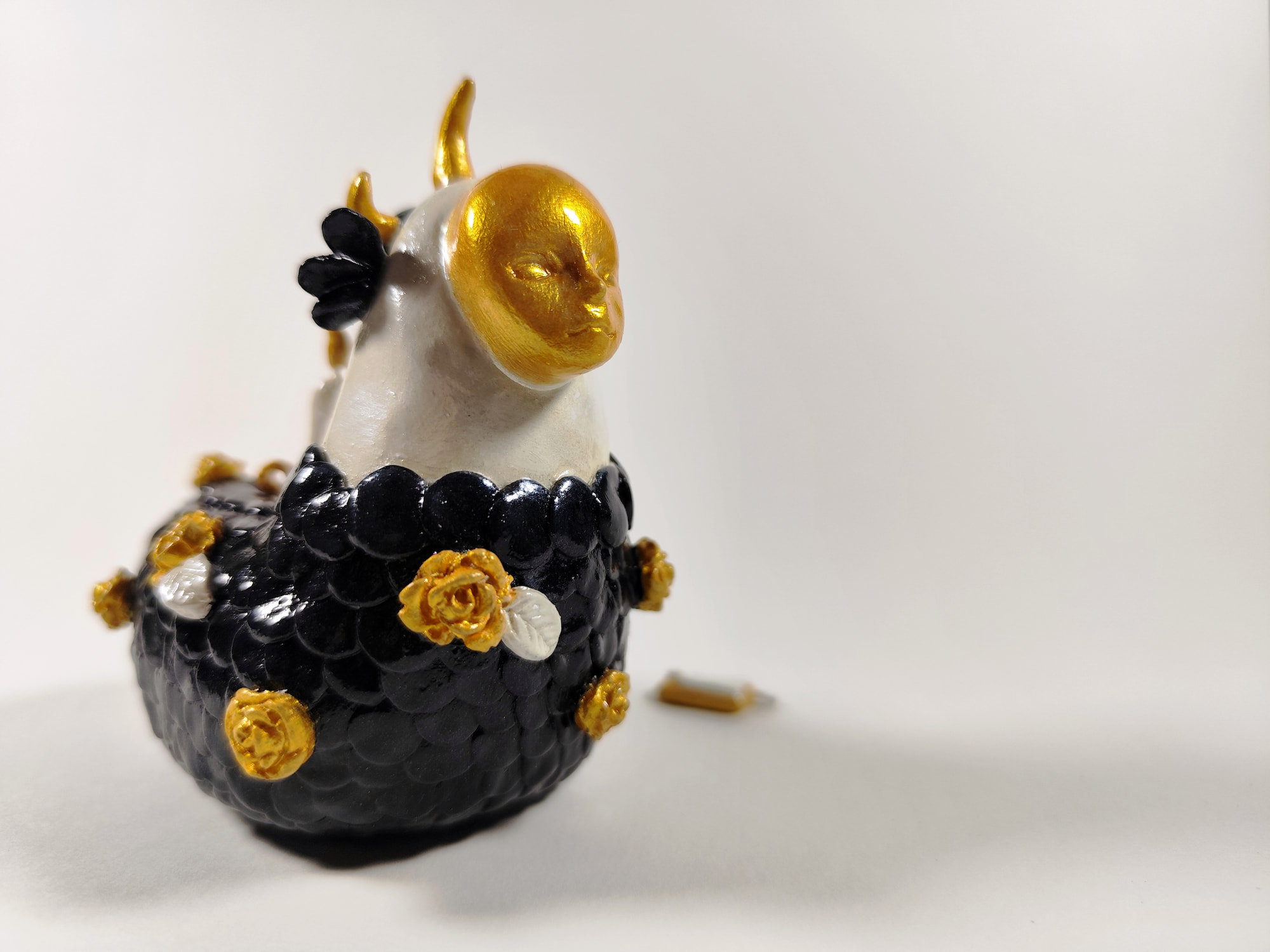
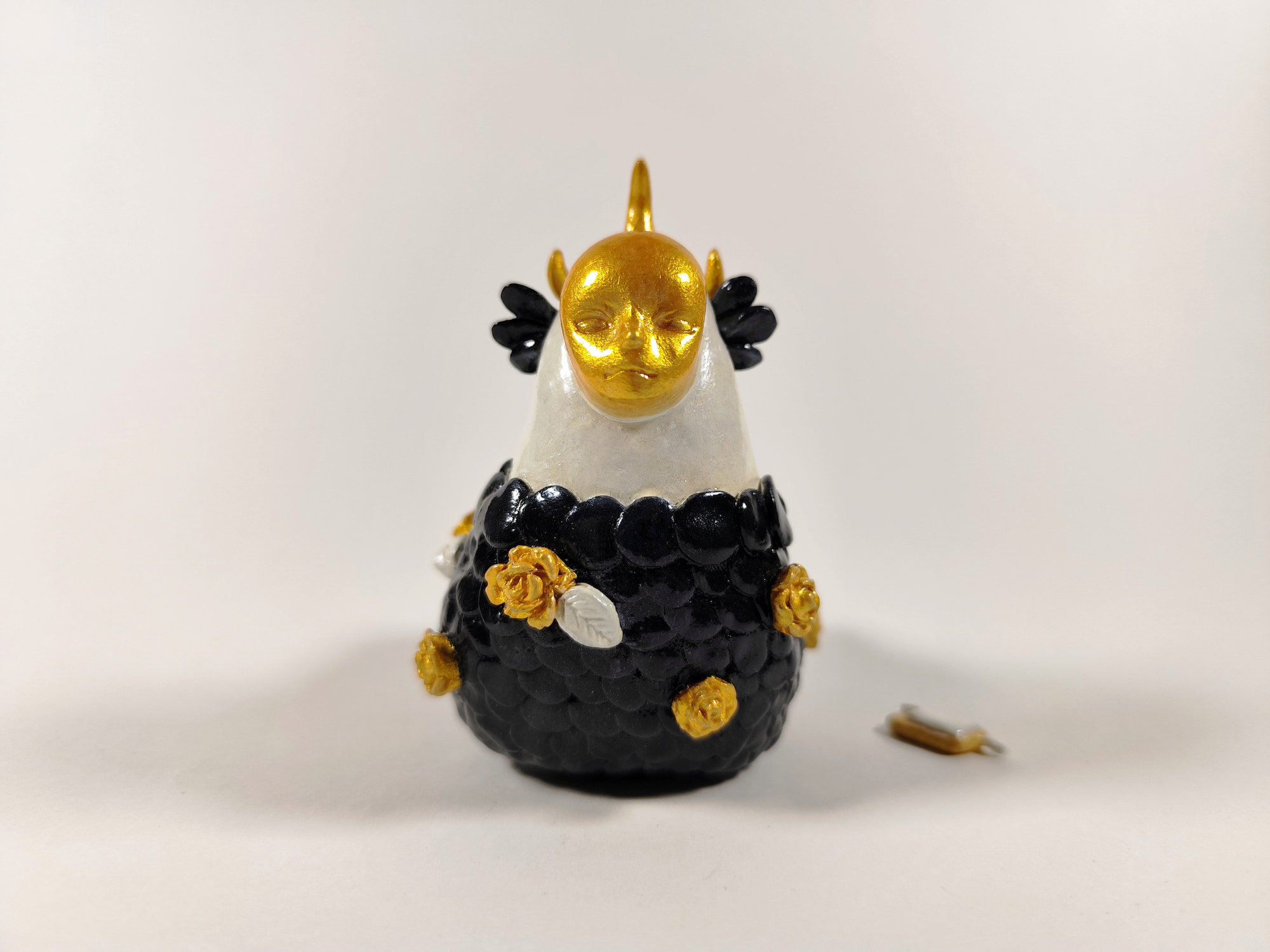

"Two faces gaze into the abyss: one guards the intimate, the other wears the golden armor of day.
There is no great distance between the candles of ritual and the cold light of the screen, for the search for connection with the collective and with transcendence remains untouched.
In technology we only find the new temple for an ancient hunger."
The Altar
Conceptual Rationale and Proposition
I. Anatomy and Psychic Architecture
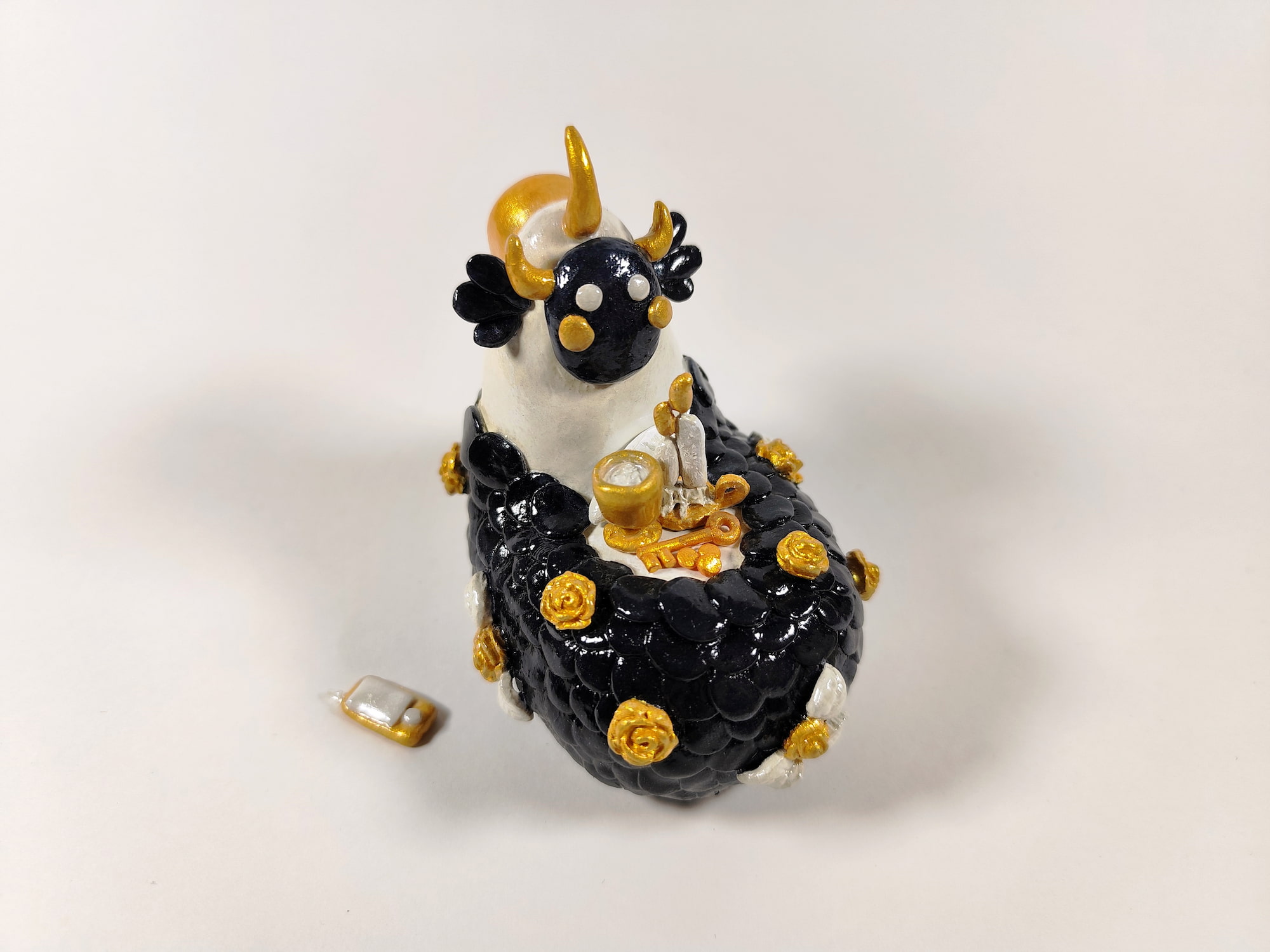
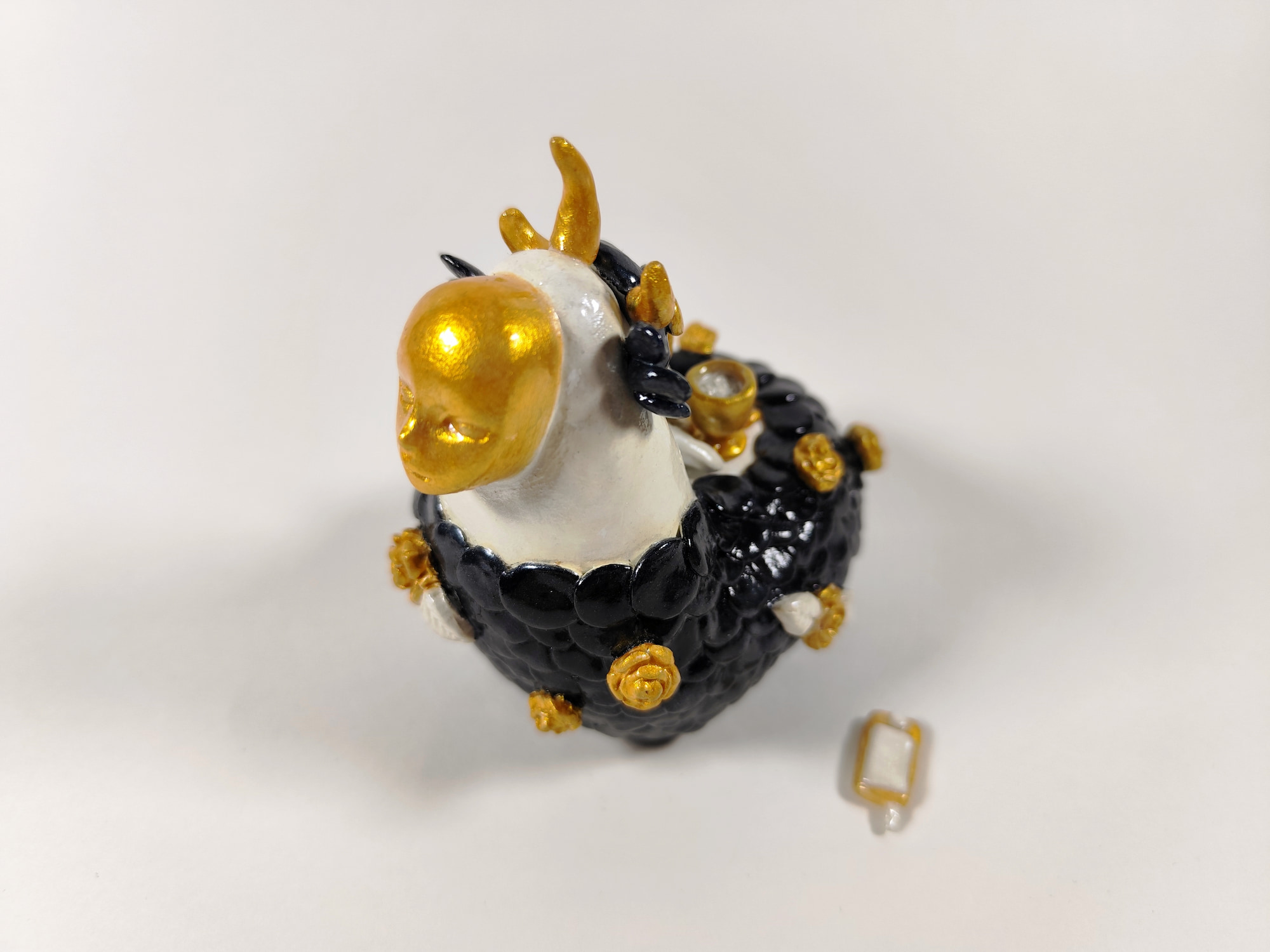
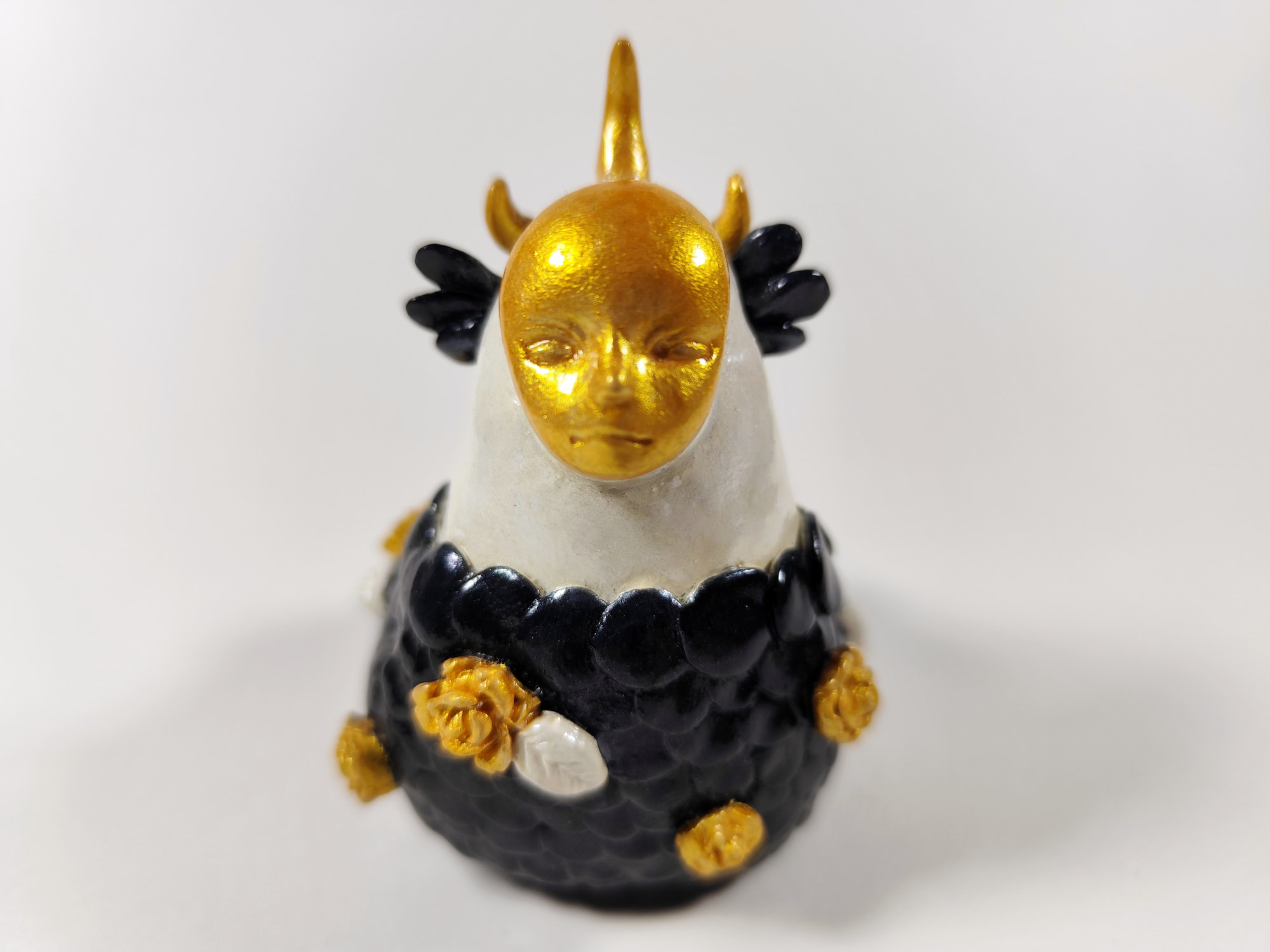
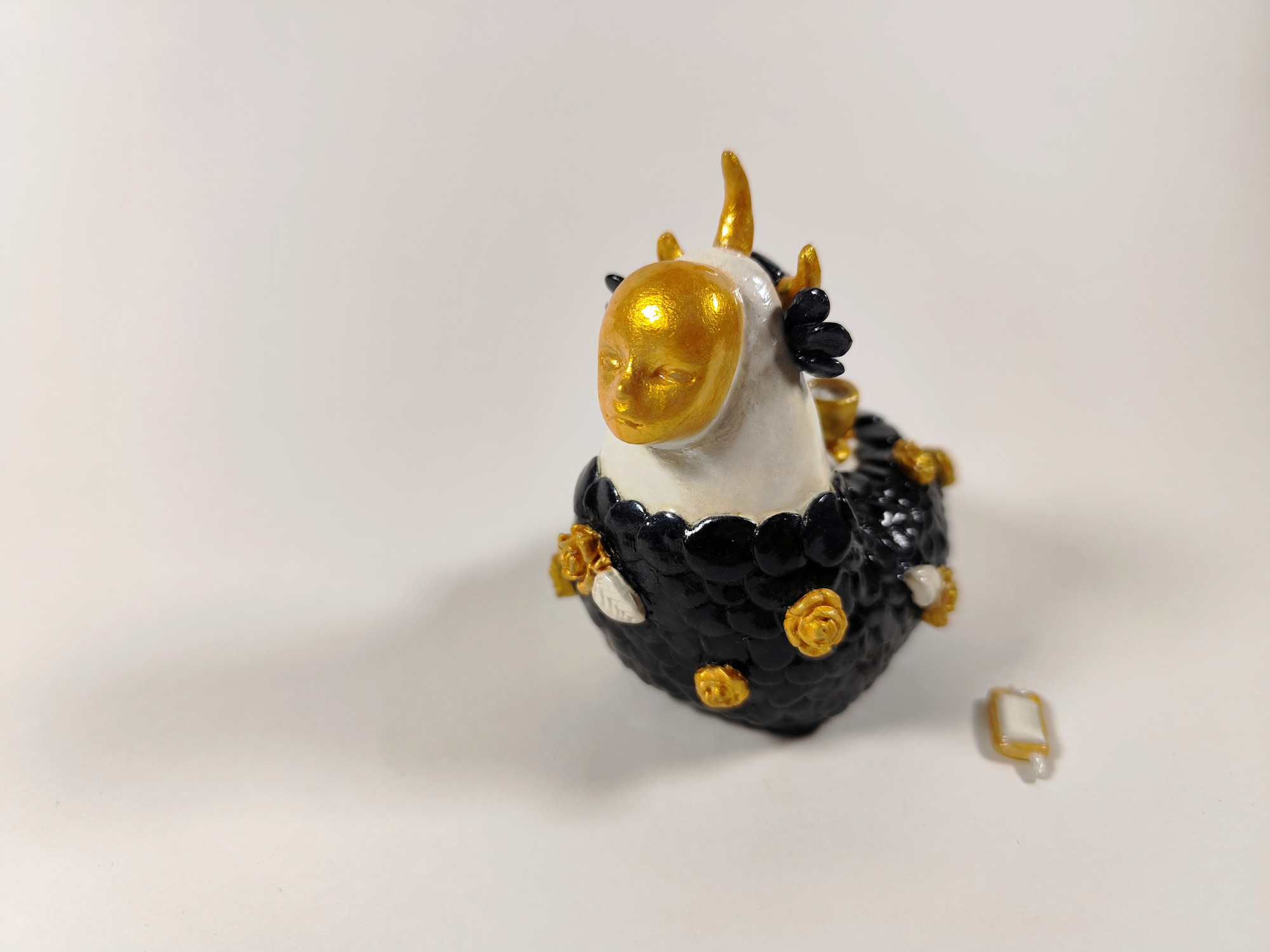
The Altar uses the structure of sacred space not to replicate the past, but to question how devotion and identity are transformed in the presence of contemporary technology. Its morphology contrasts a dark, scaly base, a symbol of the primordial and instinctual, with a smooth, white body that embodies order and consciousness. This material and chromatic opposition establishes a tension. The lower zone can be associated with the primary shadow and the upper zone with differentiated form: not as an illustrated sequence of stages, but as a visual structure of transformation in which the formless and the dark sustain the emergence of a clear physiognomy.
The sculpture acquires a bodily dimension. It is not merely a vessel for symbols, but a vertical organism that seems to contain distinct strata of internal experience. The scaly texture and floral growth at the base refer to a primordial, instinctual, and organic condition, while the geometric cleanliness of the upper section introduces a dimension of order, consciousness, and cultural construction. The altar thus functions as an architecture of the psyche: a body in which different layers of experience remain simultaneously present.
II. The Table of Offerings: Constellation of Signs and Archaeology of the Present
In the front surface of the base opens the space for offerings. The chalice, bread, two-headed candleholder, key, and three gold coins appear gathered as a small repertoire of objects laden with cultural memory. Their references cross religious, mythological, and analytical traditions: from the mysteries associated with nourishment and transubstantiation to the Holy Grail, the torches of Hecate, the Hermit of the Tarot, the keys to thresholds, or the obol of symbolic exchange.
Yet the artistic operation does not consist of illustrating each of these narratives. What is relevant is their coexistence. By gathering them on a single surface, the work turns different symbolic systems into a common repertoire. Objects that originally belonged to specific historical and ritual contexts lose part of their doctrinal autonomy and function as fragments of a new iconography. The chalice no longer belongs solely to a specific liturgy; the key ceases to be exclusively an attribute of the guardians of thresholds; the coins are no longer simply a funerary offering. All of them become available for a new organization of meaning.
Images and symbols are not treated as fixed units, but as elements capable of shifting across cultures, eras, and systems of representation. The sculpture translates this displacement into a three-dimensional experience. The altar is, at once, a ritual object, an image archive, and a device for iconographic reorganization. In contrast to the traditional monumentality of altars, here the rite is miniaturized and converted into a constellation of signs. The work seems to hold a religion in a state of fragment: a collection of surviving objects that continue to trigger associations in the viewer. The sculpture thus constructs an archaeology of the present: it does not seek to discover what was believed in ancient times, but to observe which forms of that need for meaning continue to operate under new appearances.
III. Janus and the Duality of Identity: Mask and Spatiality
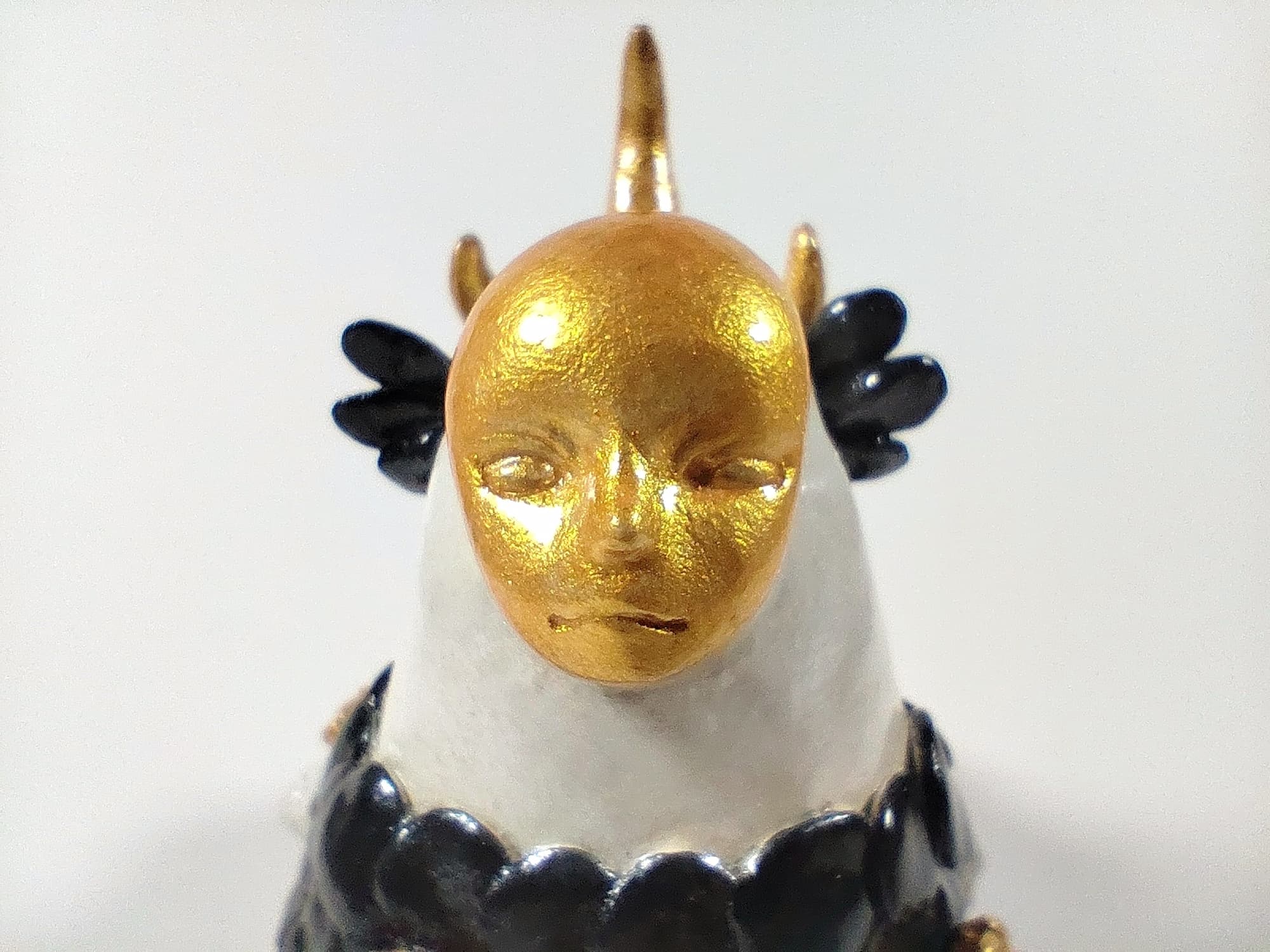
At the top, a second structure of polarity emerges: two faces oriented in opposite directions. The reference to Janus bifrons provides an obvious genealogy for this configuration, yet the work once again shifts the archetype. One of the masks, dark, schematic, and marked by elements recalling horns or wings, remains tied to the interior of the structure and oriented toward the offerings. The other, golden and naturalistic in its proportions, faces outward.
Rather than merely representing two sides of a single identity, the sculpture converts this duality into a spatial matter. One mask looks inward; the other looks outward. Identity thus appears as a structure of transit between interiority and exposure, between what is guarded and what is presented. From analytical psychology, this opposition dialogues with the relationship between the Self and the Persona, but the sculpture materializes it physically: identity is not solely a psychological condition, but also a matter of orientation, surface, and gaze. The golden exterior mask acquires a particularly relevant contemporary dimension: it is the formal armor of the Persona, but also a figure of contemporary visual identity crafted as a surface carefully constructed to be seen. Opposite it, the dark face remains linked to a more intimate, instinctual, and nocturnal dimension.
IV. Digital Liturgy, Technognosis, and Regimes of Attention
It is precisely at this point that the smartphone located next to the altar introduces a decisive rupture. The device, designed with a pearlescent white screen and golden edges, does not function as a simple contemporary object placed beside an archaizing sculpture. Its presence retrospectively alters the entire work. If the altar was traditionally a place of mediation between the individual and that which was considered superior, transcendent, or collective, today the smartphone constitutes another form of mediation: a surface through which the individual accesses information, bonds, images, recognition, and belonging.
The sculpture thus establishes an unexpected proximity between two technologies of relation: on one side, the altar; on the other, the smartphone. One concentrates the community through ritual; the other through permanent connectivity. One organizes objects of offering; the other organizes flows of images, messages, affects, and attention. One promises access to an order that transcends the individual; the other opens a window onto a network that also exceeds them. The work does not claim that both devices are equivalent; its power lies precisely in placing them in tension. The smartphone appears physically separated from the altar, placed on the floor as if belonging to another realm of reality. This spatial distance avoids a literal identification and allows it to be read as a second device of mediation that has emerged alongside the first. Spatial separation thus becomes a form of montage: two technologies of relation remain close without merging.
The phone can also be read as a new surface for the exposure of the self. The identity that was once negotiated through social masks is now also projected through screens and digital profiles. The Persona finds an extension here: it is no longer merely the mask we physically present before a community, but an identity continuously constructed, edited, and observed within a network. The relationship with the candles introduces a particularly fertile tension: the flames concentrate the gaze inward, whereas the phone screen redirects attention toward an external network. One illuminates a small, contemplative space; the other connects to a potentially limitless field of interaction. Both are sources of light, but they belong to different perceptive regimes.
In this sense, the work approaches the phenomenon of technognosis: the persistence of impulses historically associated with the pursuit of knowledge, connection, or transcendence within technological environments. Rather than presenting the smartphone as a new sacred object, it is more accurate to understand it as a device that inherits, transforms, and secularizes functions previously concentrated in ritual spaces. The screen becomes a surface of mediation competing with the altar for the subject's attention. The altar demands that one pause, approach, observe the objects, and recognize their relationships; the phone, by contrast, belongs to a culture of continuous information flow. Positioned together, the work confronts two regimes of contemplation: ritual concentration and permanent connectivity.
V. The Circulation of Archetypes
The sculpture consolidates itself as a hybrid altar situated between two eras of mediation. Not because technology has eliminated the sacred, but because certain human needs for belonging, recognition, orientation, or connection have found new material supports. Here, one of the piece's most contemporary operations unfolds: it does not represent the disappearance of ancient symbols, but their survival within a transformed visual landscape.
The altar, the mask, the key, the candle, the chalice, the coins, and the phone coexist because they are all objects that organize relationships between the individual and what lies beyond them. The sculpture converts this coexistence into a visual structure where the archaic and the technological do not appear as absolute opposites, but as two moments within the same history of devices of mediation. Rather than pitting the sacred against the secular, The Altar reveals their problematic continuity: the ritual impulse does not vanish when its vessel changes; rather, it shifts, revealing how ancient structures of meaning-seeking reappear under new contemporary configurations.