
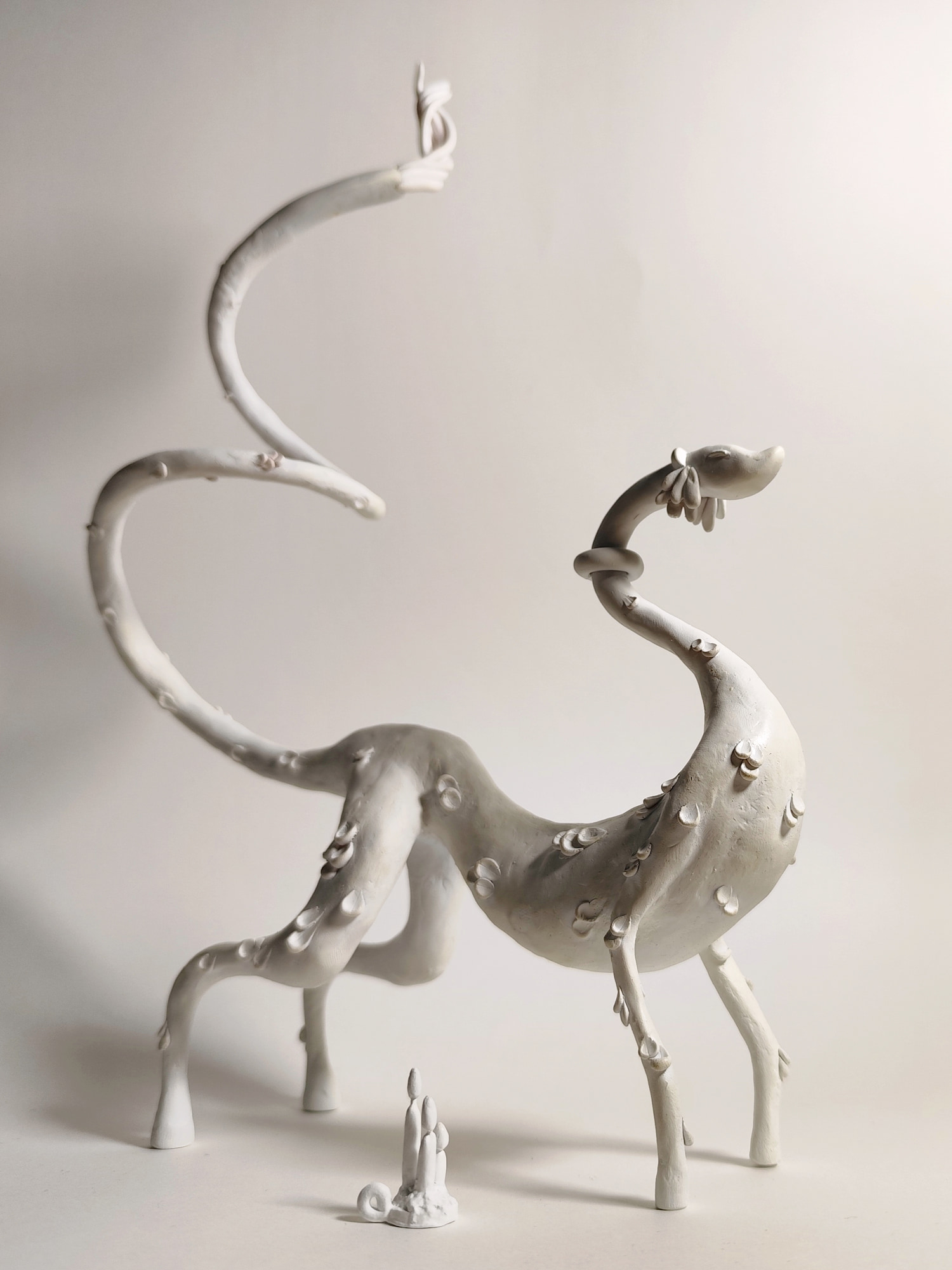
The Guardian: Fire
Blanca de la Torre
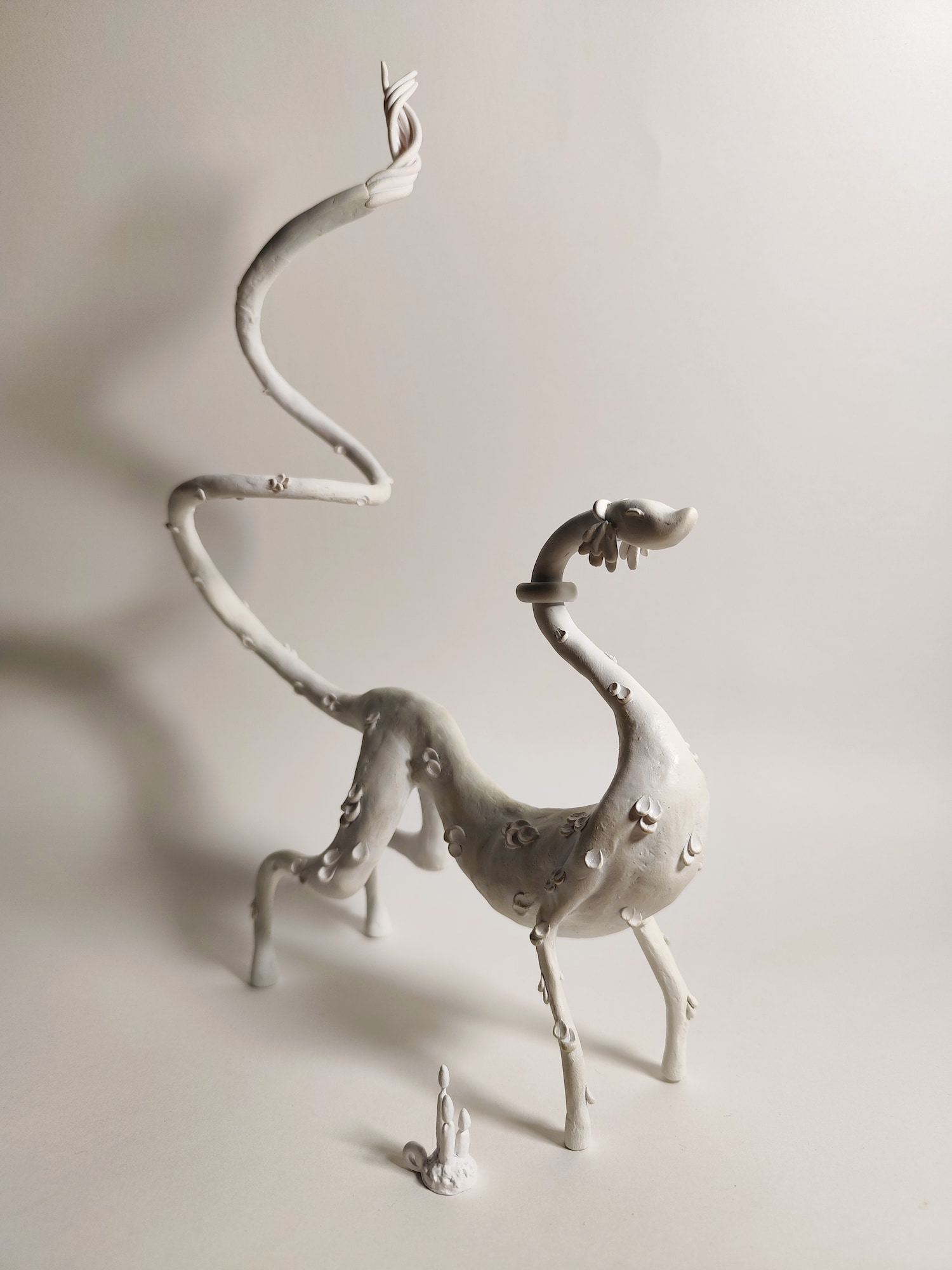
Polymer medium, acrylic paint, and aluminum armature.
Two-piece installation. Piece 1: 29.7 x 20.5 x 7.2 cm; Piece 2: 2.6 x 2 x 1.3 cm.
2026
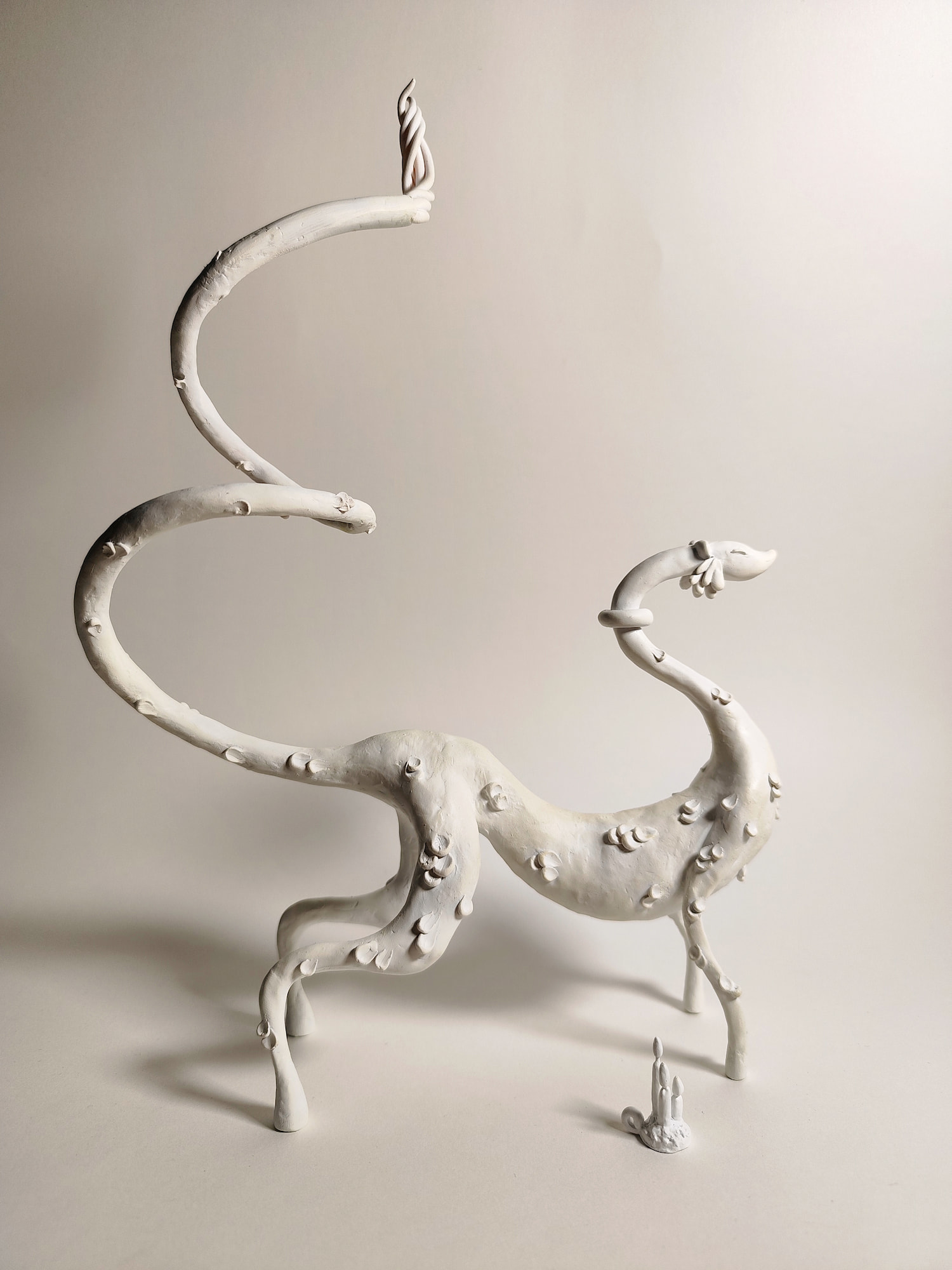
"The dragon no longer scorches the earth with destructive fury, but safeguards the spark of memory.
It no longer embodies the ravenous fire of chaos, but the soft light of vigil and transmutation.
It no longer devours space, but ignites a pause in the center of the gloom."
The Guardian: Fire
Conceptual Rationale and Proposition
I. The Anthropology of the Flame and Contained Energy
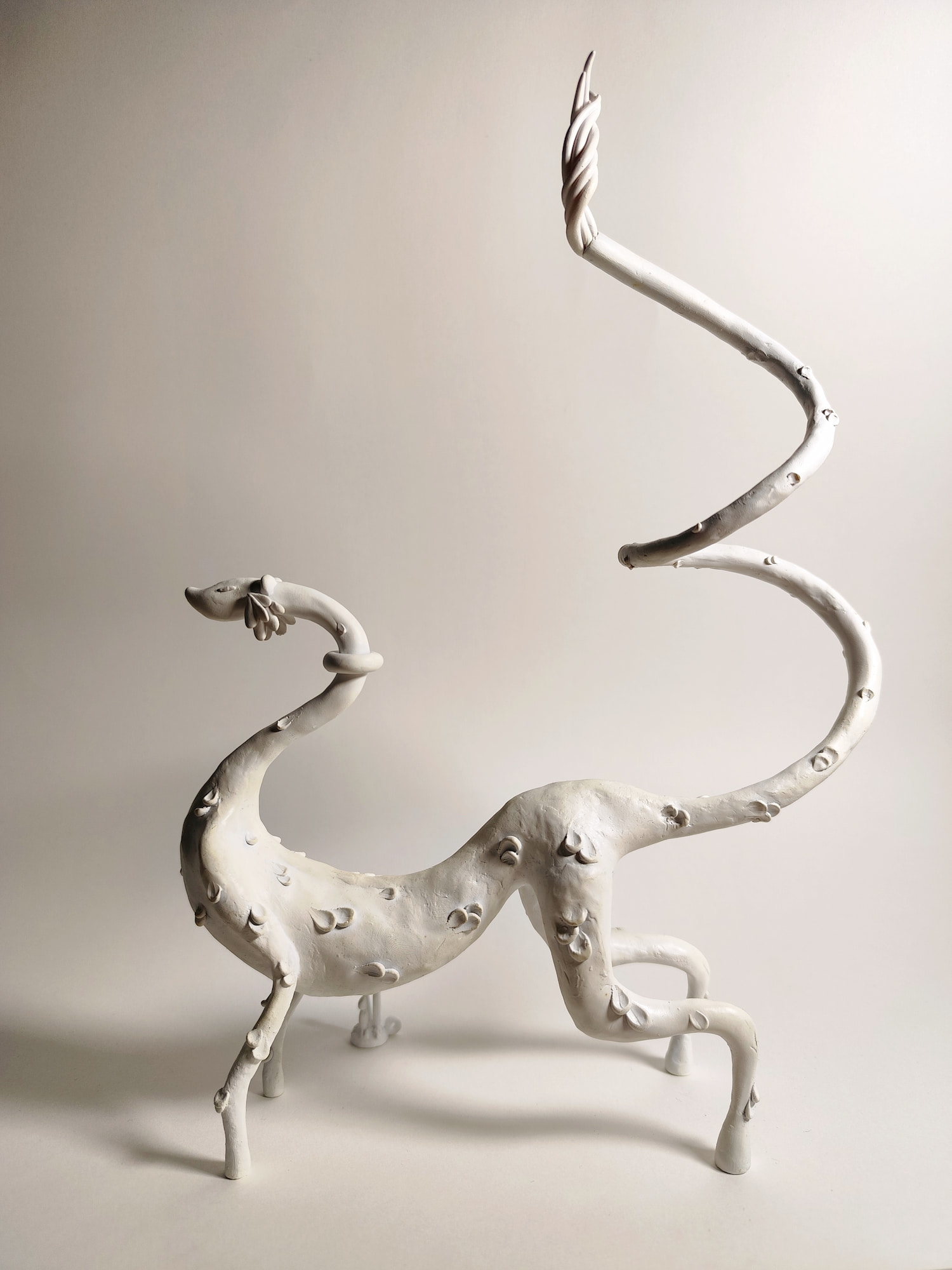
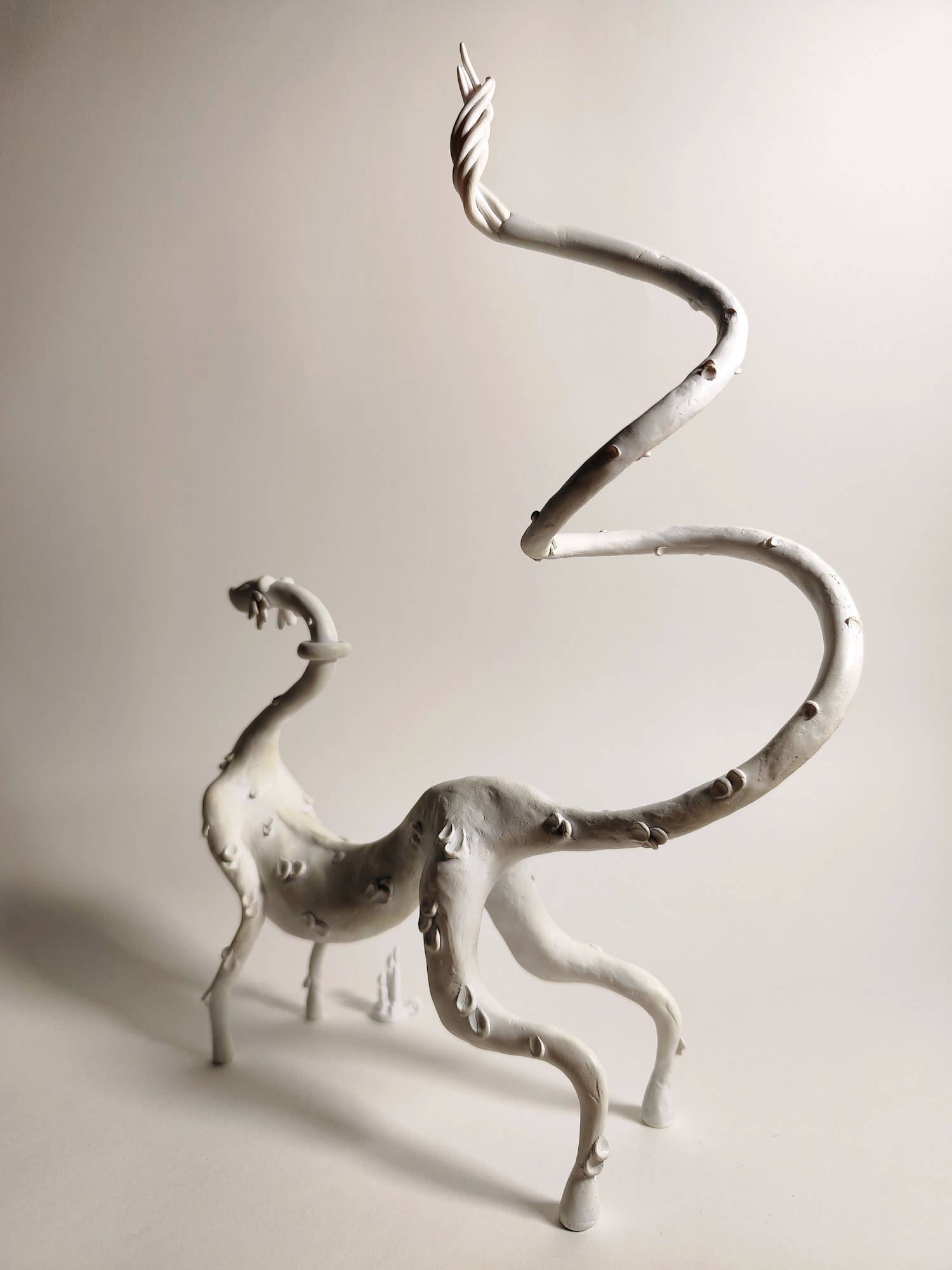
This sculpture proposes an investigation into the persistence and mutation of igneous symbology within contemporary visual culture. Through a stylized, aerodynamic animal posture that spirals upward into a helical flame and coexists with a floor-bound candlestick featuring sculpted candles, the piece establishes a zone of optical pause and concentration. The work eludes linear mythical narratives to operate as an analytical mechanism, questioning how ancestral notions of vigil, clarity, and shelter are reconfigured amidst the dematerialization of light in the hyper-connected era.
II. The Thermal Paradox and the Dematerialization of Warmth
Current artistic practice is situated within a scenario characterized by a singular thermal paradox: while the constant circulation of data and digital activity generate an invisible, ceaseless friction across servers, the physical experience of fire has been neutralized. In today's hyper-technological environment, lighting has become a cold emission of LED screens and semiconductor diodes, a uniform light that relentlessly exposes everything while ignoring the rhythm of shadow. Primal fire, around which language and communal gathering were originally structured, remains exiled from everyday visuality. Facing this sensory anesthesia, this sculpture intervenes as a point of formal condensation. The work reclaims combustion not as a destructive force, but as an ontological principle of symbolic concentration that demands a slowing down of the gaze and restores critical thickness to matter.
III. The Solar Psychopomp, the Promethean Legacy, and Contained Energy
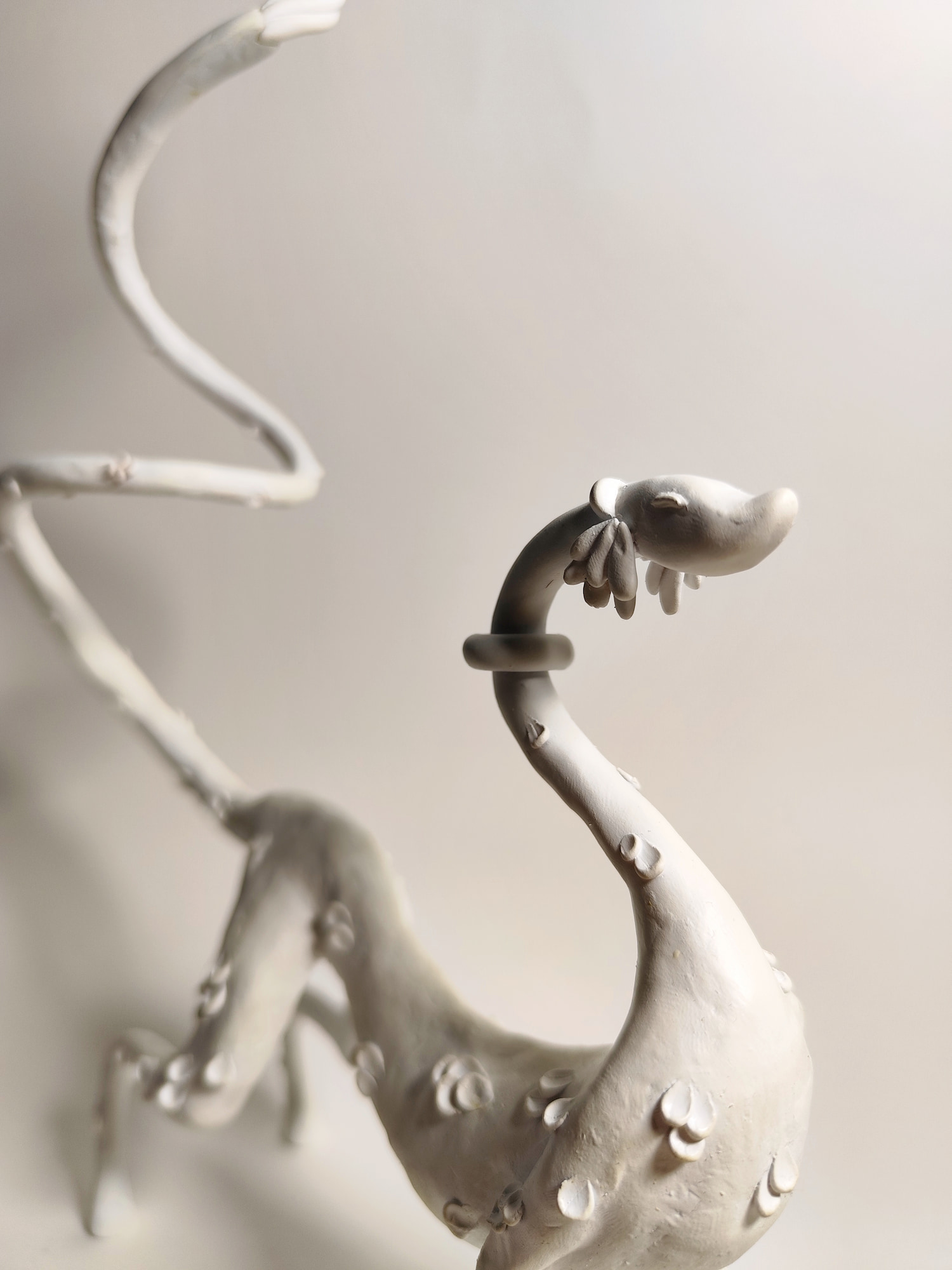
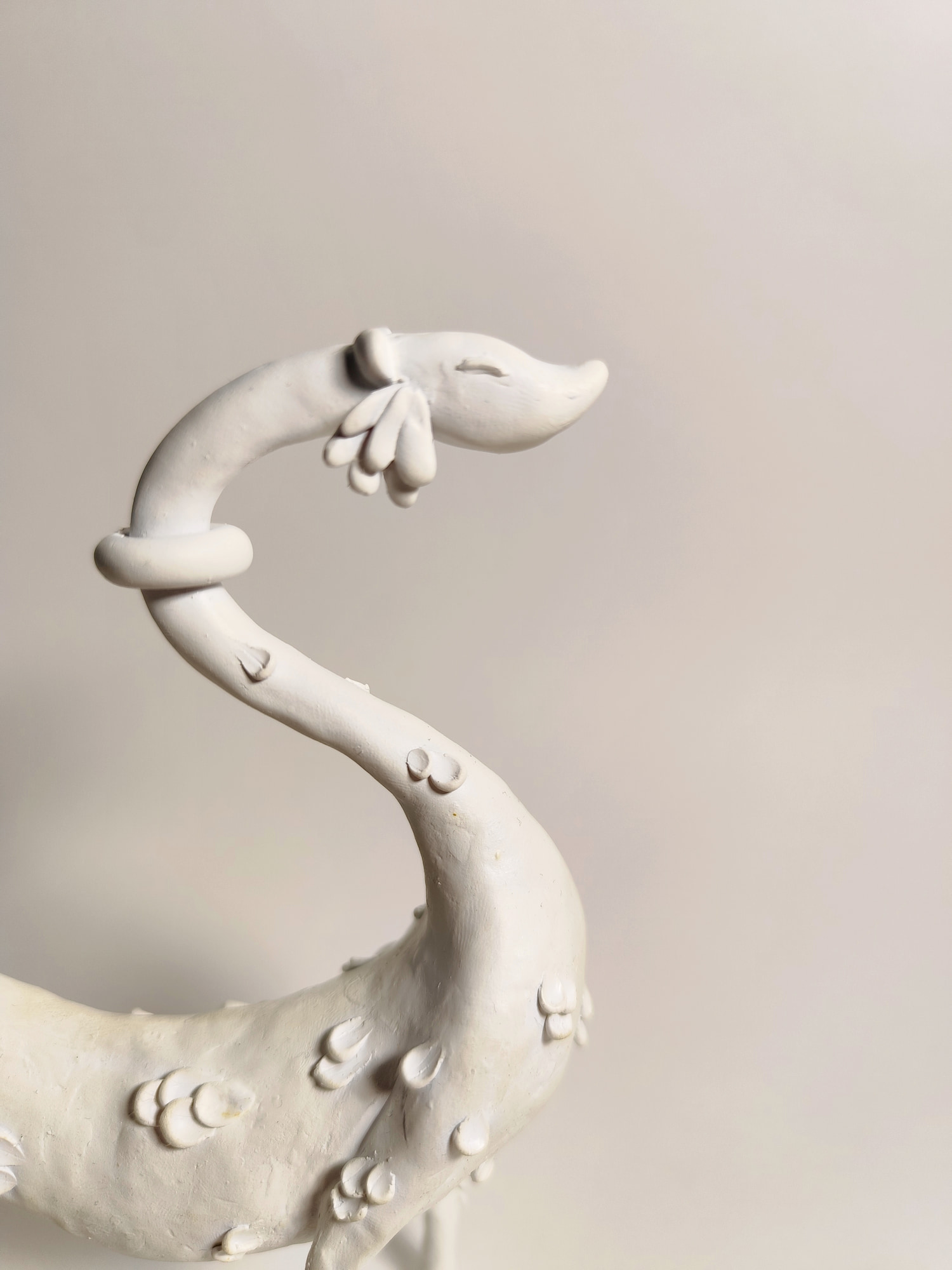
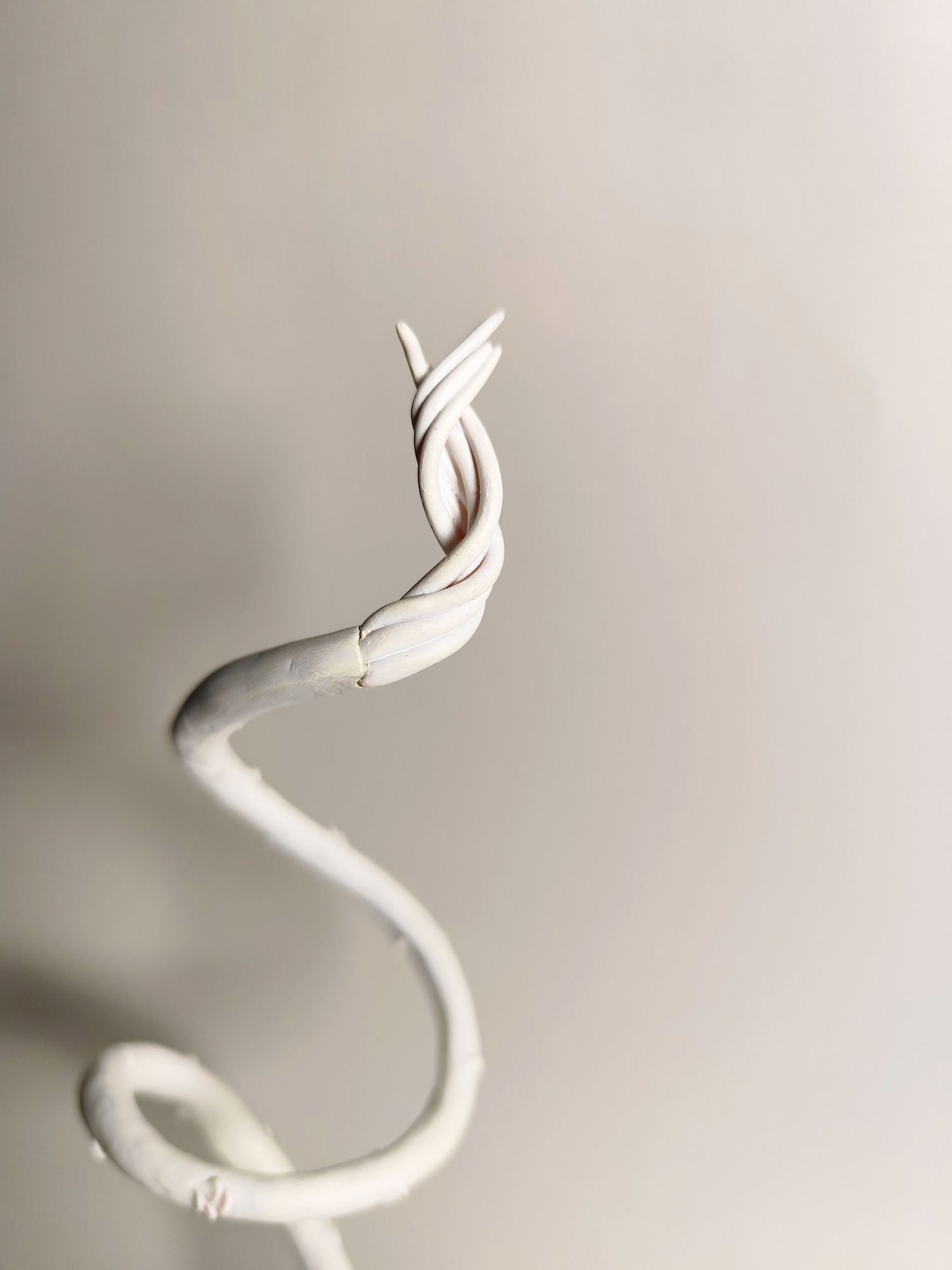
The anatomical configuration of the entity reinterprets dragon iconography, stripping it of the literal readings common in mass media. From an anthropological perspective, the volume is defined as a conscious, solar psychopomp: a guardian of fire assuming the legacy of the Promethean spark, the latent knowledge that transforms dense matter. Far from embodying a destructive or aggressive beast threatening to scorch its surroundings, this guardian steps back from destructive ferocity to become a peaceful, watchful embodiment of contained energy. Its head lacks hostile features, displaying a serene surface where the igneous element has been entirely removed from the jaws. By confining the flame exclusively to the tip of its tail, where matter braids and flows smoothly into space, the creature assimilates vital and passionate energy, relegating it to the posterior appendage to convert it into a controlled, conscious driving force that translates ancestral fascination with combustion into a syntax of contemplation and introspection.
IV. Modulation of the Scale and the Syntax of Ascent
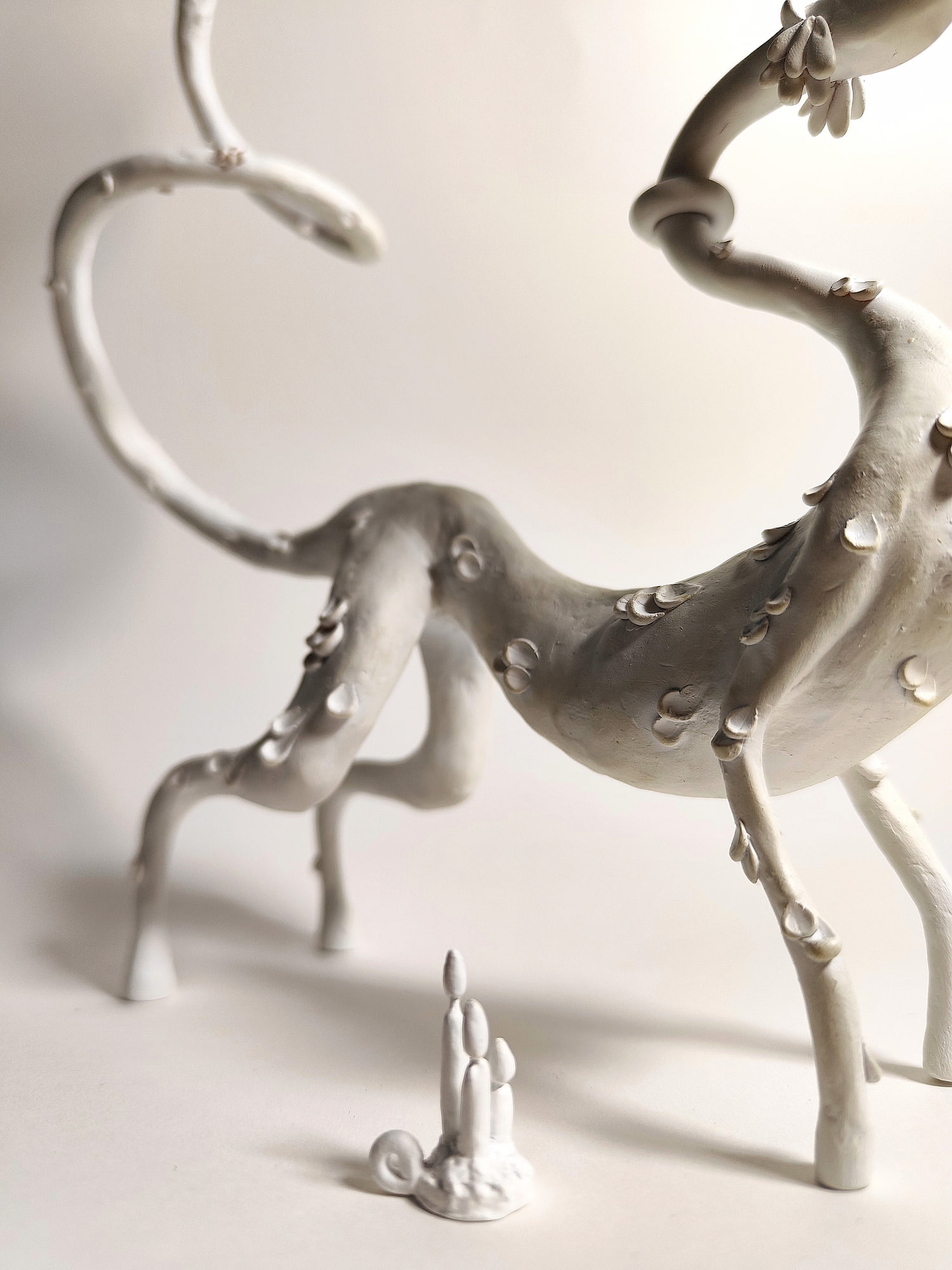
In its volumetric execution, the piece dispenses with opaque mass and static weight, distancing itself from the heavy burden of the classical European dragon, which is markedly chthonic and tied to earthbound heaviness. Instead, it crystallizes into a sinuous silhouette of austere whiteness and formal lightness, engaging directly with a high-contrast, linear grammar of clear vector lineage. The curves of its slender anatomy project into space with geometric clarity, invigorated by a constellation of nodular scales dotting its skin as a rhythmic surface modulation that imparts a distinct tactile quality. The primary dynamism lies in its ascending tail, which rises in a helical line evoking a burst of flame or a column of smoke, maintaining the monochromatic purity of the polymer substrate. Likewise, the circular collar positioned at mid-neck acts as a formal boundary, a ring of containment alluding to the modulation of instinctual forces and primary impulses, channeling energy toward a higher function of rational discernment.
V. Secular Liturgy, the Candlestick, and the Hermit's Lantern
At the core of the sculpture lies an inquiry into the numinous from a strictly secular standpoint. In contrast to historical traditions that confined the use of fire and tapers to doctrinal dogmas or ecclesiastical settings, the work shifts this repertoire into the exhibition space through the inclusion of the floor-resting candlestick. This configuration connects directly to the poetics of The Hermit within universal symbolic tradition and Arcana IX in analytical psychology: the figure raising a lantern not to invoke esoteric mysticism, but as a symbol of introspective quest, intellectual autonomy, and the self-contained light that guides through darkness via a retreat into subjectivity. The work thus appeals to the scale of the candlestick and its three candles, whose small flames point along the vertical axis of the volume, defining an intimate, bounded illumination, an analog light contrasting with the artificial luminescence of modern devices. Maintaining this glow requires presence and care against ambient drafts, transforming vigilance into an act of welcome that safeguards memory against alienation. The volume assumes the symbolic function of that archetypal lantern, echoing the sacred duty of the ancient Vestals tasked with guarding the central fire as an organizing principle that preserves the light of self-knowledge against chaos.
VI. Comparative Mythology Iconography and Mass Culture
To understand the universality of the dragon archetype as a vessel for controlled fire, comparative mythology and mass culture offer cross-cutting references: from traditional benevolent deities such as the Eastern Qilin, the Baltic spirit Aitvaras, or the Japanese dragon god Kaji-gami linked to rational development, to its evolution in contemporary pop fiction. Across today's interactive and visual media, this transition oscillates between destructive, unbridled combustion (such as the Targaryen dragons or Smaug's material greed) and the formal lightness of clean-lined, anatomically fluid creatures (such as Reshiram, Haku, or Falkor), whose whiteness evokes the purity of protective principles with which this work dialogues. This monochromatic treatment situates the sculpture within the realm of albedo (the work in white) of classical alchemy, understood here as overcoming the chaos and primary instinct of nigredo. By deliberately renouncing traditional combustion hues like red or orange, the piece operates a conceptual reading where ambient light casts soft shadows over the curves of the tail, transforming the destructive nature of fire into a structure of peace and formal order. Passionate energy has been integrated; fire no longer devours the subject, but becomes the external light of the candlestick focusing the viewer's attention toward the latent dynamics of perception, configuring a mechanism of critical thought that accompanies our presence in the world today.