
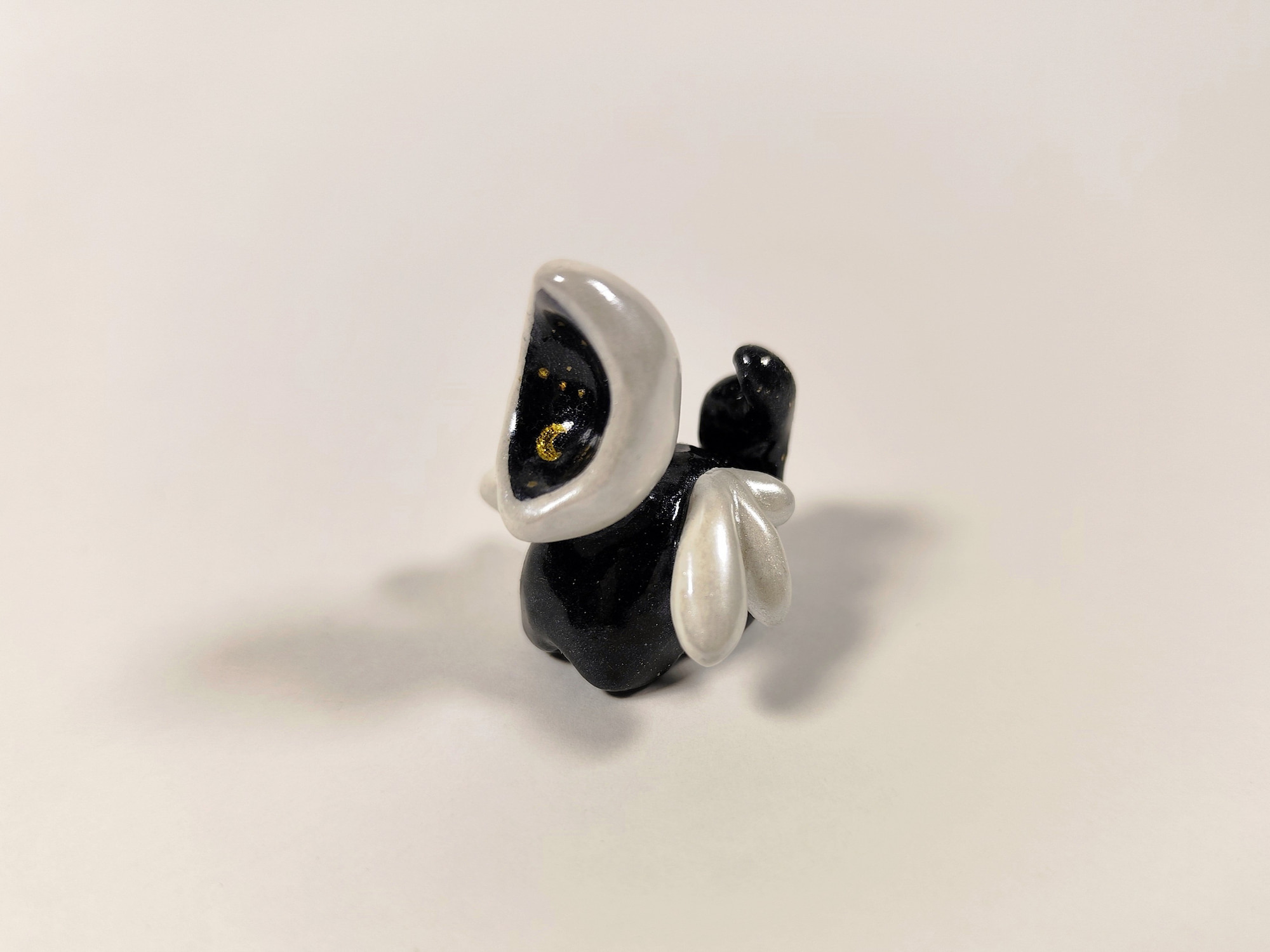
The Microcosm That Contained the Macrocosm
Blanca de la Torre
Polymer medium, composition gold leaf, and acrylic paint.
3.5 x 3.2 x 3.2 cm.
2026

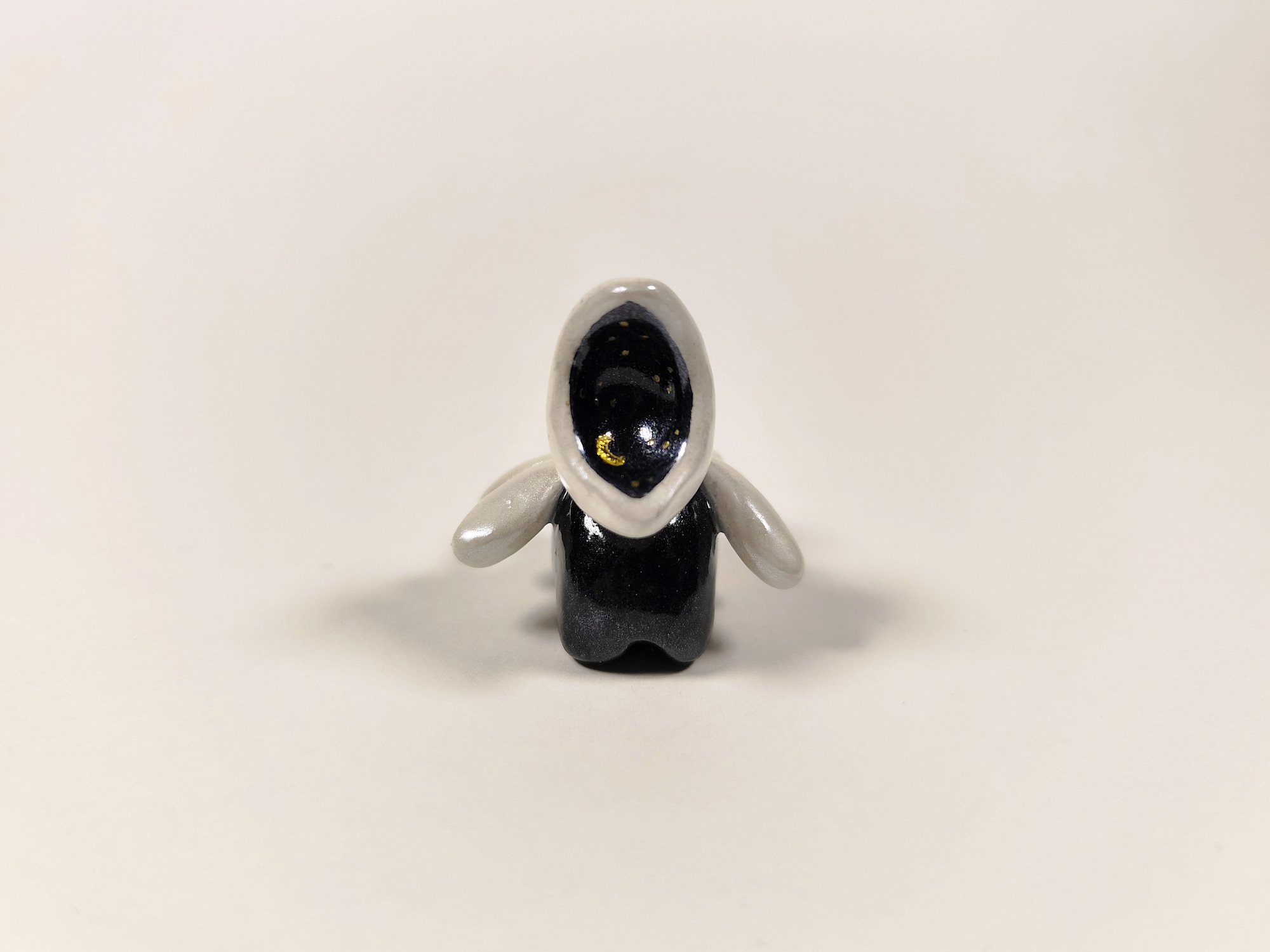
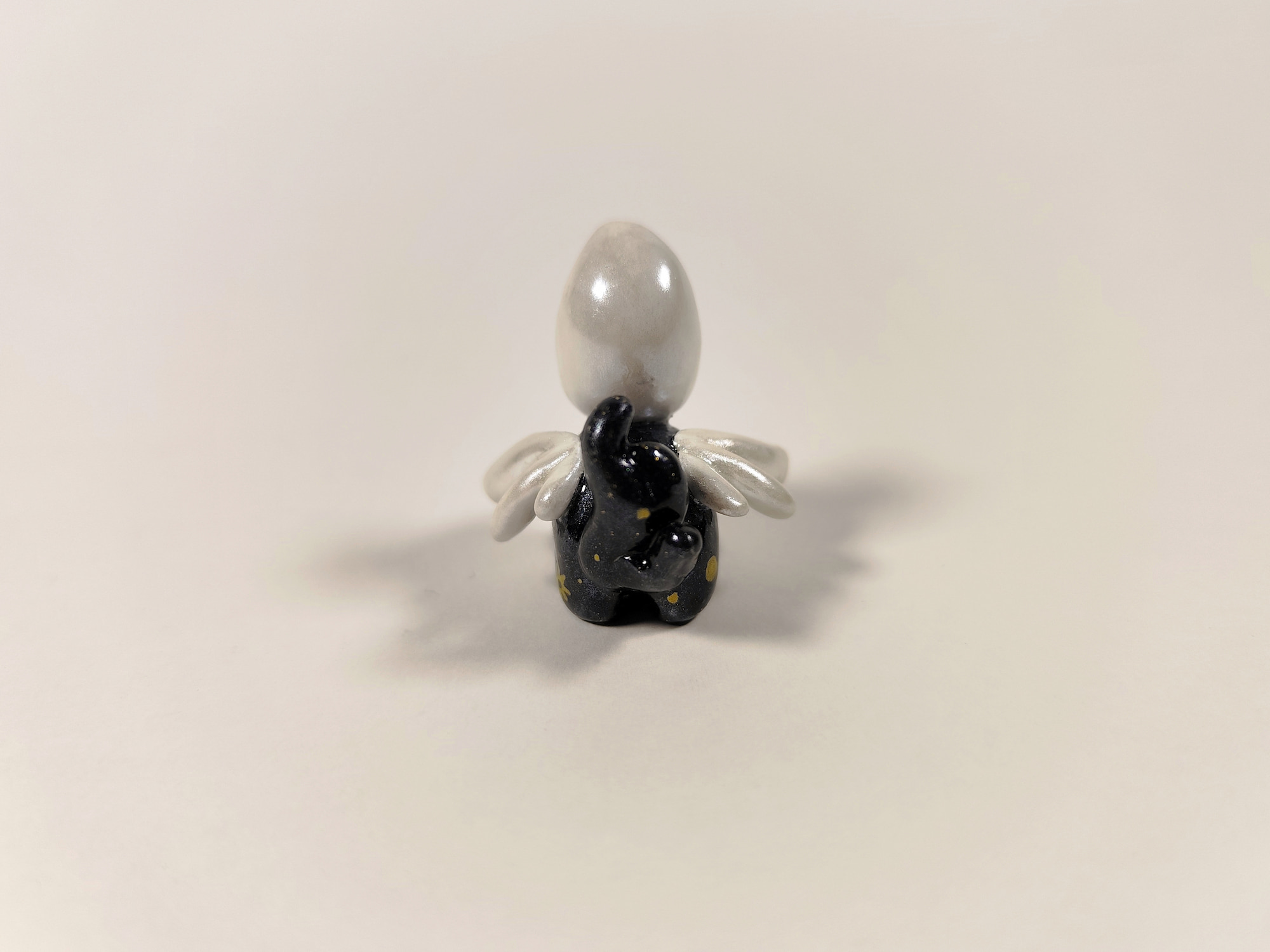
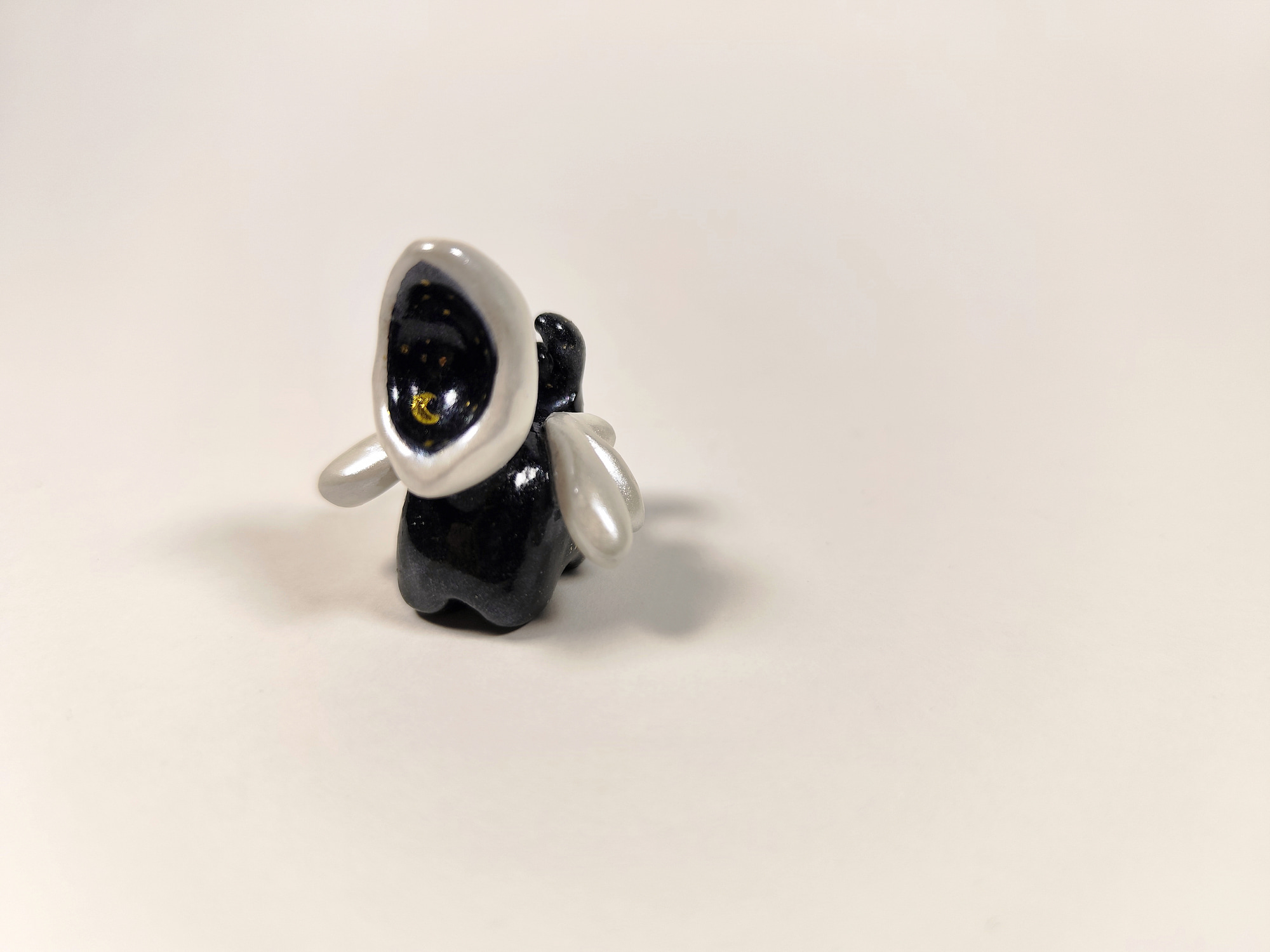
"As above, so below; as within, so without.
Within the smallest fold of matter pulses the immensity of outer space, revealing an abyss in which every center enfolds the totality of the universe."
The Microcosm That Contained the Macrocosm
Conceptual Rationale and Proposition
I. The Topology of the Body-Firmament: From the Nocturnal Archetype to Information Interfaces
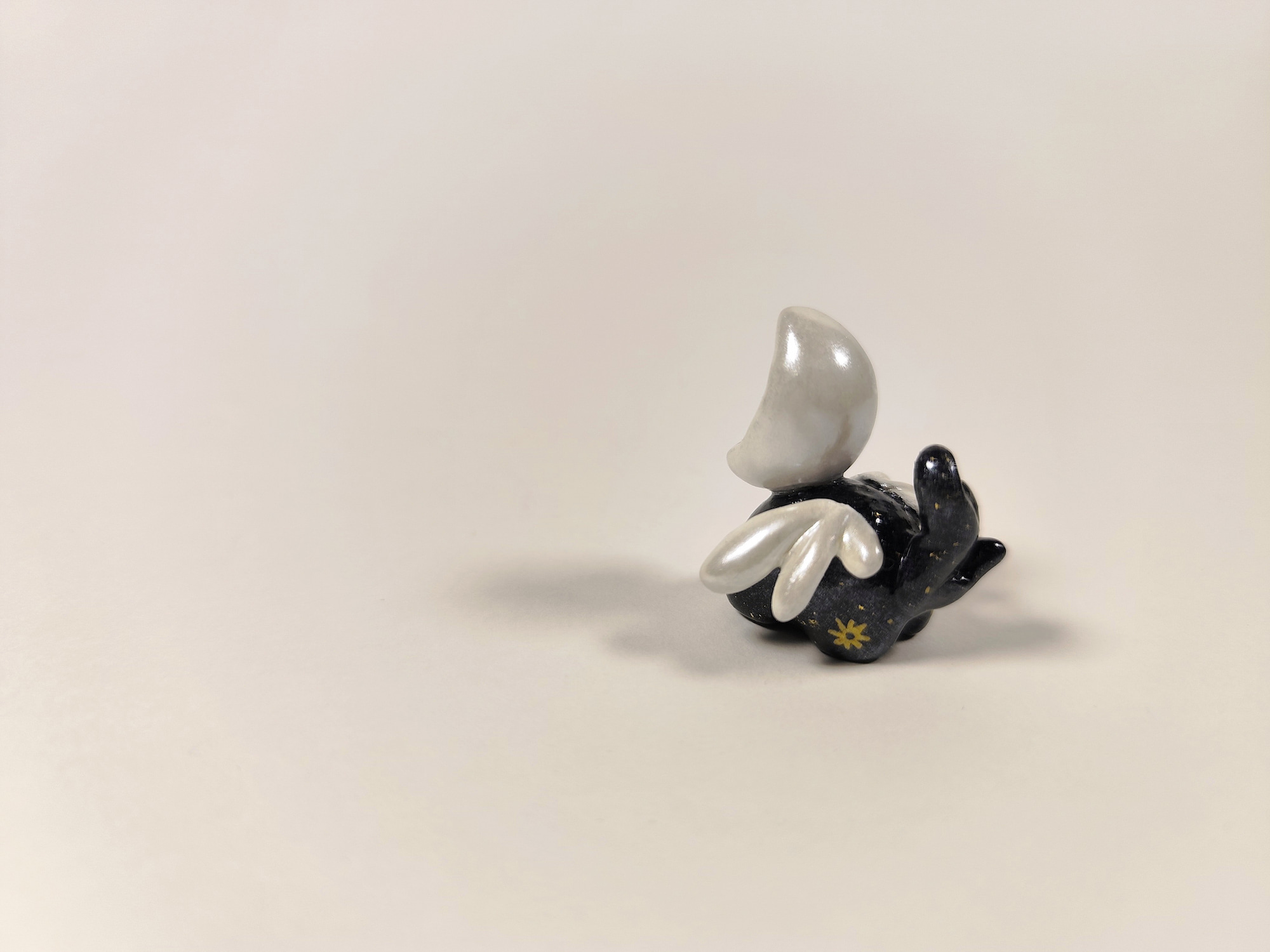
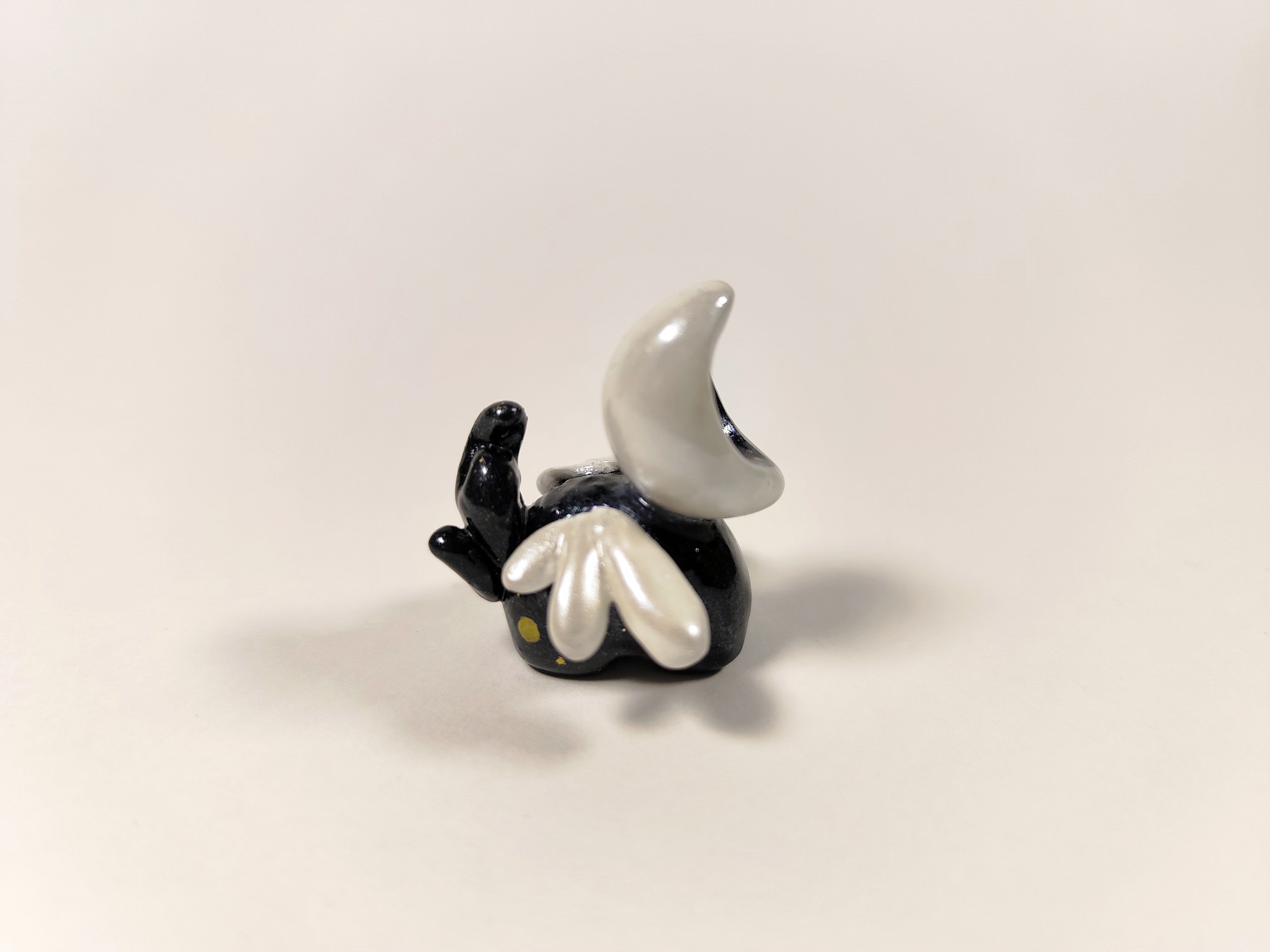
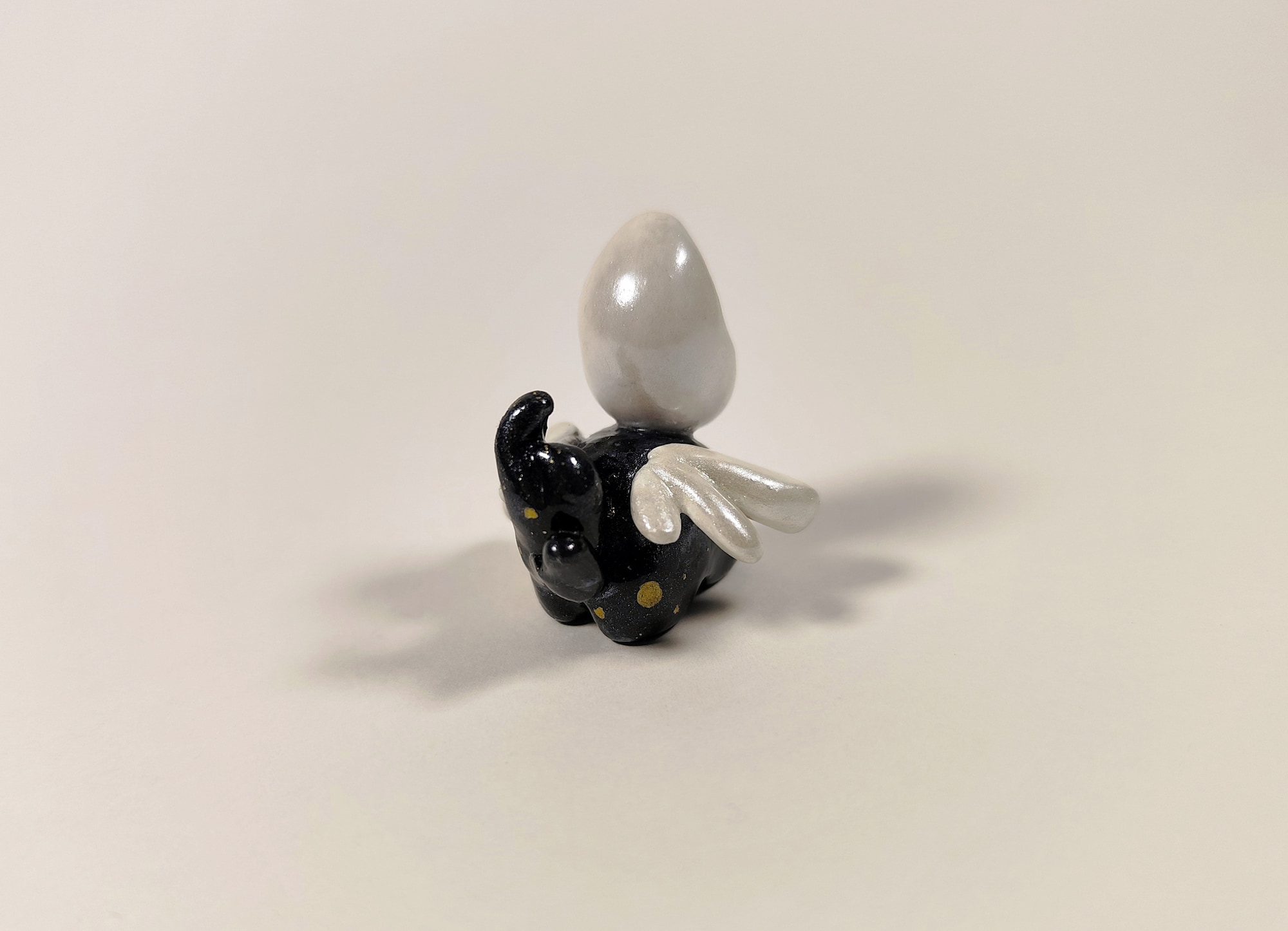
The sculpture The Microcosm That Contained the Macrocosm articulates a plastic investigation into bodily form as a canvas for cosmogonic representation. The work presents a compact zoomorphic morphology set within a dark, glossy torso, punctuated by delicate gold accents that synthesize celestial bodies, starry points, and a schematic eight-pointed sun serving as a geometric symbol of cosmic order. This compositional choice reframes the archetype of night as a material envelope, echoing the Egyptian goddess Nut, whose outstretched body formed the celestial vault, and Nyx in Greco-Roman mythology. Far from representing a sterile void, the deep black surface acts as Prima Materia, a neutral, generative container rich in formal potential, wherein the sign emerges.
This formulation projects a seamless continuity into the vocabulary of contemporary visual culture. Integrating astronomical motifs onto an intimate physical volume bridges primordial iconography with the physics of digital interfaces and the surface of the "black mirror." In modern society, the vastness of space is navigated and processed through pocket-sized screens and dark-mode interactive maps. The sculpture engages this visual regime by transforming the flat, hermetic plane of an obsolete technological device into a tactile, zoomorphic body, bringing the unreachable expanse of celestial data into a proximal, intimate scale. Rather than symbolizing emptiness, the dark pigmentation embodies a primordial density where multiple iconographic fragments converge simultaneously.
II. The Concave Head: Lunar Iconography and the Reception of Space
At the apex of the sculpture, conventional facial features give way to a geometric volume shaped as a crescent moon. The outer surface of this cephalic structure boasts a smooth, polished, pearlescent finish that softly reflects light. Its frontal plane recedes inward, creating a concave cavity steeped in deep, dark pigmentation.
This configuration establishes an analytical link to the anthropology of the lunar symbol, found in classical representations of the Roman goddess Diana and the astral crowns of Mesopotamian iconography, where the waxing moon functions as a vessel, basin, or threshold of transition. In Eastern philosophical traditions, this void evokes the concept of akasha, the pure space that enables the existence of forms and acts as a substrate bearing the memory of structures. In contemporary visual culture, this concave architecture converses with the geometry of reflective surfaces and optical capture devices. By displacing the anthropomorphic face, the sculpture erects a focal point for light. The shadowy basin defines a protected enclosure, a reserved space that condenses the viewer's gaze and draws it into the object's structural depth, operating much like the archetype of the unconscious in analytical psychology, where everyday subjectivity uncovers an unmapped abyss of infinity.
III. Fractal Recursion and the Parable of the Infinitesimal Scale
The conceptual core of the work resides inside this cephalic cavity. At the bottom of the dark basin, nested among tiny golden specks replicating the stellar grid, lies a second crescent. This compositional strategy materializes the concepts of fractal recursion and nested systems, connecting with the classic dictum of the Tabula Smaragdina (Emerald Tablet) and the philosophical framework of Indra’s Net in Huayan Buddhism, a cosmogonic model wherein every reflective node holds the image of the entire cosmic web.
The sculpture projects this principle onto contemporary complexity theory, the holographic principle, and recursive data structures in modern informatics. This operation enters into direct dialogue with the scale crisis of the algorithmic image, in which a single bit of information can encode an entire virtual environment. By harboring a golden lunula within a cosmic basin that rests upon a body covered in stars, the piece constructs a three-dimensional model of nested dimensions. Unifying the cosmic whole within a miniature receptacle finds a precise parallel in mythological anthropology through the story of Krishna in the Mahabharata. In this episode, when the infant deity opens his mouth before his mother Yashoda, he reveals not mundane dirt, but a sublime, simultaneous vision of the universe, time, oceans, and galaxies. Here, the infinitesimal detail carries the same compositional and symbolic weight as the volume supporting it, demonstrating how macrocosmic laws replicate within the microcosm and proving that order is found not in monumental heights, but in the depths of the seemingly small.
IV. Winged Structures: Organic Membranes, Vectors of Ascent, and Symbol Kinetics
Flanking the central mass are two winged structures of organic modeling, distinguished by an iridescent pearlescent finish and three convex divisions. Anthropologically, wings recall the figure of the psychopomp and divine messengers in ancient cultures (such as Hermes in Greco-Roman tradition, Horus in the Egyptian pantheon, or the winged beings of Assyrian iconography), where lateral appendages denote the capacity to traverse between the earthly realm and celestial spheres.
In comparative symbology, these structures function as engines of acceleration, weightlessness, and conceptual transmigration, embodying the aerodynamics of thought and the drive of consciousness to break free from gravity and access higher realms of abstraction. In archaic liturgical traditions, wings signify the spiritualization of matter and the volatility of intellect. Within contemporary visual culture, this symbolism evolves toward concepts of escape velocity, information flow transmission, and formal dynamism, affirming that bodily density requires a principle of elevation and movement to interact with the infinite scale of the cosmos. Furthermore, the creature's tail rises in a vertical projection that serves as a formal counterpoint to the concavity of the head, reinforcing the notion of an autonomous, perfectly balanced system within its own three-dimensional design syntax.
V. The Miniaturization of the Cosmos: The Reduced Model and the Multidimensional Object
Rather than projecting the cosmos as a distant, unreachable phenomenon, the work employs the anthropological mechanism of the "reduced model" (modèle réduit), theorized by Claude Lévi-Strauss in his analysis of the artwork. Through this lens, reducing scale and miniaturizing a complex object allows the human intellect to grasp, master, and comprehend it in its entirety at a single glance. This paradox of infinity contained within the bounds of a modest object resonates deeply across classical Latin American literature and the narratives of contemporary mass culture alike.
In the literary domain, the proposition aligns with Jorge Luis Borges’s concept of The Aleph, a concentric point just a few centimeters wide, hidden in a domestic setting, through which an observer can view the entirety of the macrocosm, oceans, and galaxies all at once, without overlap or loss of clarity. Similarly, in contemporary science fiction cinema such as Men in Black, the climax revealing an entire galaxy contained inside a small glass marble played with by higher entities acts as a narrative device honoring the same hermetic truth: immensity does not depend on the physical scale of the container, but on the multidimensional nature of the vessel. The sculpture restores to the viewer a physical relationship with the astronomical scale. By condensing the celestial vault and its cycles into a compact, manageable volume, the piece transforms the vastness of outer space into an object of direct contemplation. In doing so, it obliges the individual to withdraw outward projections and recognize that the sky observed in the surrounding landscape is equal in hierarchy to the depths inhabiting the latent strata of their own perception.